
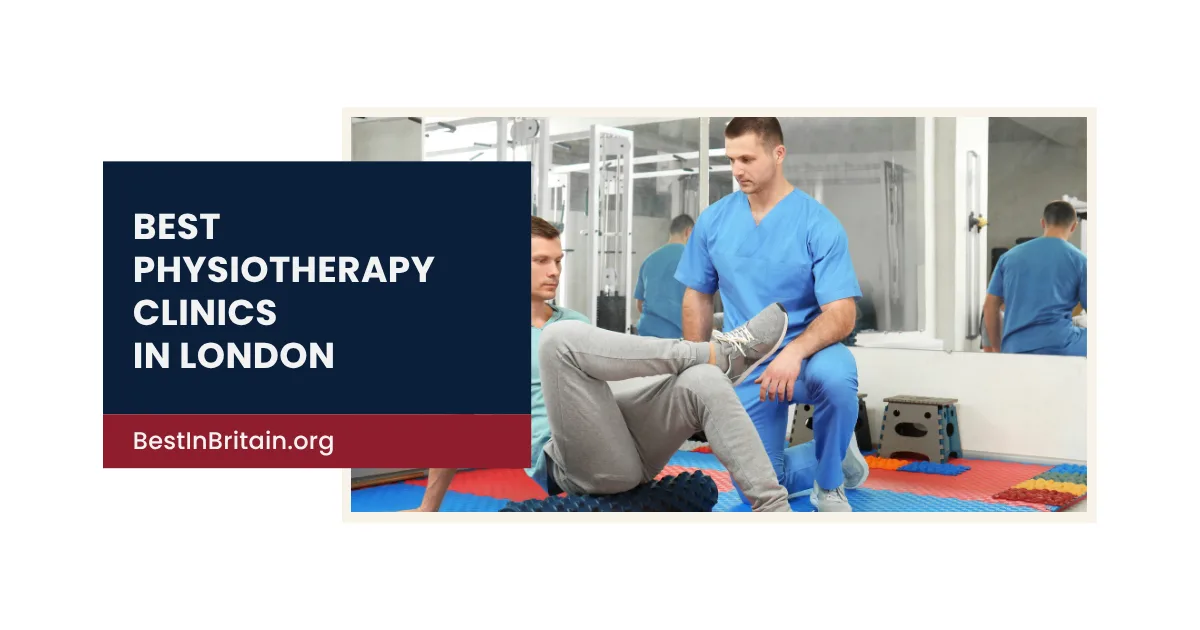
London physiotherapy clinics range from independent musculoskeletal practices to multi-site services combining physiotherapy with sports medicine, strength and conditioning, pelvic health, podiatry and post-operative rehabilitation.
The right clinic depends on the condition, therapist’s professional registration, access to suitable rehabilitation space, appointment length, insurance arrangements and whether medical or surgical input is also required.
The six clinics below cover meaningfully different models without turning the guide into an oversized directory.
What distinguishes a suitable physiotherapy clinic?
Physiotherapist is a protected title in the UK. Check that the individual practitioner is registered with the Health and Care Professions Council rather than relying only on the clinic’s branding.
Before booking, ask:
- Who will assess the condition
- HCPC registration details
- Experience with the relevant problem
- Initial appointment length
- Follow-up length
- Complete self-pay fee
- Insurance recognition
- Whether authorisation is required
- What treatment is included
- Whether exercise rehabilitation is provided
- Access to gym or rehabilitation equipment
- When medical referral is needed
- Cancellation terms
- How progress is reviewed
No clinic can guarantee that pain will disappear within a fixed number of appointments.
At a glance
| Clinic | Main format | Published price signal | Main strengths | Particularly useful for |
|---|---|---|---|---|
| Beyond Health | Physiotherapy and clinical exercise in Parsons Green and Queen’s Park | Physiotherapy and rehabilitation prices vary by appointment; running assessment £190 | Musculoskeletal rehabilitation, clinical strength, Pilates and running assessment | Patients wanting treatment and progressive exercise in one service |
| One Body LDN | Multi-location London physiotherapy provider | Standard private rate £185 for 55 minutes; promotional self-pay options may apply | General musculoskeletal care, post-operative rehabilitation and broad London access | Patients prioritising location choice and extended appointments |
| Octopus Clinic | Independent Blackfriars physiotherapy and chiropractic clinic | Quote or booking-page price required | Musculoskeletal treatment, sports rehabilitation and post-operative care | City and Temple patients wanting one independent clinic |
| Fit2Function Clinics | Fitzrovia physiotherapy and injury clinic | Initial assessment £100; follow-ups generally £120–£130 for 60 minutes | Long appointments, exercise rehabilitation and selected physical modalities | Patients wanting one-hour follow-ups near Oxford Circus |
| Pure Sports Medicine | Multidisciplinary sports and musculoskeletal clinics | Initial physiotherapy £157; follow-up £103 for 30 minutes | Physiotherapy, sports medicine, podiatry, diagnostics and specialist rehabilitation | Complex sports injuries and cases needing multidisciplinary input |
| Six Physio | Large London physiotherapy network | Standard initial assessment around £130; consultant and specialist services cost more | Musculoskeletal, pelvic health, oncology, Pilates and specialist rehabilitation | Patients wanting broad specialist services across several locations |
Fees change and may differ by clinician, speciality, appointment length and insurer.
How much does physiotherapy cost in London?
Private physiotherapy commonly costs around £80–£160 for an initial appointment and £70–£130 for a standard follow-up. Senior clinicians, extended appointments and specialist pelvic-health or sports services may cost more.
The full pathway can include:
- Initial assessment
- Follow-up treatment
- Diagnostic imaging
- Shockwave therapy
- Injection
- Clinical Pilates
- Rehabilitation class
- Gym programme
- Massage
- Brace or equipment
- Consultant review
- Insurance excess
- Cancellation charge
Ask whether physical modalities and exercise rehabilitation are included in the appointment fee or billed separately.
Beyond Health
Editorially SelectedParsons Green: 3rd Floor, Brigade House, 8 Parsons Green, London SW6 4TN
Queen’s Park: 2nd Floor, 105–109 Salusbury Road, London NW6 6RG
Parsons Green phone: 020 3848 9434
Format: Physiotherapy, clinical exercise, Pilates and strength-and-conditioning services
Published price signal: Running assessment £190; clinical Pilates and strength sessions from £95 for 30 minutes or £190 for 60 minutes
Website
Beyond Health combines physiotherapy with progressive exercise services at Parsons Green and Queen’s Park.
The clinic treats musculoskeletal pain, sports injuries and post-operative rehabilitation and also provides clinical Pilates, strength and conditioning, running assessment and selected physical modalities.
This model can be useful where the patient needs to move from symptom management into supervised strength or return-to-sport work without changing provider.
Biomechanical and running assessments may help identify movement patterns, but they should not be presented as discovering one universal “root cause” of pain. Symptoms usually reflect several factors, including load, tissue sensitivity, health, sleep and activity.
Beyond Health publishes prices for several rehabilitation services, although the exact physiotherapy fee should be confirmed for the chosen clinician and appointment length.
Pros
- Physiotherapy and progressive exercise within one service
- Parsons Green and Queen’s Park locations
- Clinical Pilates, strength and running assessment
- Extended weekday opening
Best for: Patients wanting to progress from physiotherapy into supervised strength, Pilates or running rehabilitation.
What to confirm: Ask which clinician will assess the problem, the appointment length and which exercise services are additional.
One Body LDN
Editorially SelectedLondon locations: Includes London Bridge, King’s Cross, Mayfair, Clapham, Greenwich and other London clinics
Opening: Monday to Friday, generally 8am–8.30pm; weekends, generally 9am–4pm
Format: Multi-location musculoskeletal physiotherapy provider
Published standard private rate: £185 for a 55-minute session; self-pay promotions may differ
Website
One Body LDN provides private physiotherapy across a growing network of London clinics.
The service covers back and neck pain, knee and running injuries, gym-related problems, post-operative rehabilitation and other musculoskeletal conditions. HCPC registration is stated for its physiotherapists.
A multi-site service can make follow-up more practical for people who divide time between home and work. Patients should nevertheless confirm whether they will continue with the same physiotherapist and whether records transfer seamlessly between clinics.
The clinic publishes a standard private-insurance rate of £185 for a 55-minute session. Self-pay introductory offers and shorter sessions may produce different prices, so the booking page should be checked carefully.
Insurance patients need authorisation, policy details and clarity on any excess or session-price cap before attending.
Pros
- Broad London clinic network
- Extended weekday and weekend opening
- 55-minute standard private appointments
- General and post-operative musculoskeletal rehabilitation
Best for: Patients wanting a choice of locations and longer musculoskeletal appointments.
What to confirm: Ask whether the same clinician can manage all visits and whether the displayed price is an introductory, self-pay or insurance rate.
Octopus Clinic
Editorially SelectedAddress: Harmsworth House, 13–15 Bouverie Street, London EC4Y 8DP
Phone: 020 7583 8288
Opening: Monday to Friday, 8am–8pm
Format: Independent physiotherapy, chiropractic and sports-injury clinic
Insurance: Selected private insurers are accepted
Website
Octopus Clinic is an independent Blackfriars practice providing physiotherapy, chiropractic treatment and rehabilitation.
Its services cover musculoskeletal pain, sports injury, post-operative recovery, running-related problems and exercise rehabilitation. Acupuncture and other adjunctive treatments may also form part of selected plans.
The clinic’s location is practical for City, Temple and Blackfriars workers. A single-site model can also support continuity where the patient wants one team to coordinate treatment.
Manual therapy, acupuncture or other hands-on techniques should support a broader plan rather than replace progressive exercise and self-management where these are clinically appropriate.
Octopus does not present a simple full public fee list on its main pages, so patients should obtain the initial and follow-up cost directly before booking.
Pros
- Independent central London clinic
- Musculoskeletal, sports and post-operative services
- Long weekday opening
- Physiotherapy and exercise rehabilitation available
Best for: City patients wanting physiotherapy and sports rehabilitation close to Blackfriars.
What to confirm: Ask about appointment length, clinician registration, treatment fee and the cancellation deadline.
Fit2Function Clinics
Editorially SelectedAddress: Saki House, 97 Mortimer Street, London W1W 7SU
Phone: 020 7117 2076
Opening: Monday to Friday, 8am–8pm; Saturday, 8am–4pm
Format: Physiotherapy and injury-rehabilitation clinic
Published price: Initial assessment £100; follow-ups generally £120–£130 for 60 minutes
Website
Fit2Function provides physiotherapy and exercise rehabilitation near Oxford Circus.
The clinic uses 60-minute follow-up appointments and states that hands-on treatment, exercise rehabilitation and selected technologies such as laser or shockwave can be incorporated without a separate modality charge.
Longer appointments can allow more time for assessment, education and exercise practice than a conventional 30-minute follow-up. Whether every session needs an hour should depend on clinical need.
The clinic promotes manual therapy, exercise, laser, shockwave, cupping and other modalities. Patients should ask what evidence supports each component for their specific diagnosis and what progress would indicate that the plan should change.
The initial assessment is published at £100. Current follow-up pricing is generally £120–£130 depending on the treatment plan.
Pros
- Published initial and follow-up prices
- One-hour follow-up appointments
- Central Fitzrovia location
- Exercise rehabilitation and selected modalities included in the session
Best for: Patients wanting extended appointments and a combined manual-therapy and exercise approach.
What to confirm: Ask why each proposed modality is appropriate and whether shorter follow-ups are available.
Pure Sports Medicine
Editorially SelectedLondon locations: Includes Moorgate, St Paul’s, Chancery Lane, Canary Wharf and Kensington
Format: Multidisciplinary sports and musculoskeletal medicine service
Published physiotherapy price: Initial 60 minutes £157; follow-up 30 minutes £103; extended follow-up 60 minutes £176
Additional services: Sports medicine, podiatry, hand therapy, strength and conditioning and diagnostics
Website
Pure Sports Medicine operates multidisciplinary clinics across central London and Canary Wharf.
Its physiotherapists work alongside sports-and-exercise medicine doctors, podiatrists, hand therapists, strength coaches and other musculoskeletal professionals. This can be particularly useful where symptoms require medical diagnosis, imaging, injection assessment or coordinated return-to-sport planning.
Standard physiotherapy currently costs £157 for an initial 60-minute assessment and £103 for a 30-minute follow-up. Advanced and specialist physiotherapy appointments carry higher fees.
The network includes services for hand and wrist rehabilitation, women’s health, running and complex sports injuries. Not every speciality is available at every location.
Multidisciplinary access can reduce fragmented care, but each service may carry a separate consultation or treatment fee.
Pros
- Physiotherapy within a multidisciplinary sports-medicine service
- Several London locations
- Clear standard and advanced pricing
- Access to podiatry, medical and specialist rehabilitation services
Best for: Complex sports injuries or musculoskeletal conditions requiring coordinated medical and rehabilitation input.
What to confirm: Ask which disciplines are necessary, which clinic provides them and the complete expected pathway cost.
Six Physio
Editorially SelectedLondon network: Multiple clinics including Borough, Fitzrovia, Moorgate, Mansion House and other central locations
Phone: 020 7036 0286
Format: Large physiotherapy network with general and specialist services
Published standard price signal: Initial physiotherapy assessment around £130; consultant physiotherapist initial assessment around £155
Website
Six Physio has operated in London since 1996 and provides general musculoskeletal care alongside several specialist services.
Its wider programme includes pelvic-health physiotherapy, men’s health, oncology rehabilitation, hand therapy, sports treatment and clinical Pilates. This range makes it useful for patients whose needs fall outside routine back, neck or limb rehabilitation.
Standard initial physiotherapy appointments are currently advertised at around £130 at selected London clinics, with consultant and specialist services priced higher. Women’s-health initial appointments are commonly £165, while consultant appointments can be £190.
Specialist labels should be matched to the individual physiotherapist’s training and experience. Patients should confirm the exact clinic because service availability differs by location.
A larger network can improve appointment choice but may also mean that the patient needs to request continuity with one practitioner.
Pros
- Large London clinic network
- Musculoskeletal and specialist physiotherapy services
- Pelvic health, oncology and Pilates pathways
- Published standard and specialist price signals
Best for: Patients seeking pelvic-health, oncology or other specialist physiotherapy within a broad network.
What to confirm: Ask which location offers the required speciality and whether ongoing appointments will remain with the same physiotherapist.
Physiotherapist, osteopath or chiropractor?
Physiotherapist
A physiotherapist is an HCPC-regulated healthcare professional trained in assessment, rehabilitation, exercise and physical treatment.
Osteopath
Osteopath is also a regulated title. Osteopaths are registered with the General Osteopathic Council and commonly use manual treatment, movement and exercise.
Chiropractor
Chiropractors are registered with the General Chiropractic Council. Their scope and treatment style differ between practitioners.
The professional title alone does not establish suitability for every condition. Check the individual’s training and approach.
When to seek urgent medical care
Seek urgent assessment rather than routine physiotherapy for:
- New bladder or bowel dysfunction
- Saddle numbness
- Rapidly worsening weakness
- Suspected fracture
- Major trauma
- Hot swollen joint with fever
- Chest pain
- Severe shortness of breath
- Unexplained calf swelling
- Sudden severe headache
- New facial or limb weakness
- Post-operative wound infection
- Unexplained weight loss with persistent pain
Physiotherapists should screen for red flags and refer appropriately.
What should happen at an initial assessment?
A thorough appointment commonly includes:
- History of symptoms
- Medical history
- Medication review
- Activity and work demands
- Examination
- Strength and movement testing
- Neurological screening where relevant
- Explanation of likely diagnosis
- Treatment options
- Exercise plan
- Expected review point
- Referral where needed
The patient should understand what the clinician thinks is happening and what would cause the plan to change.
Manual therapy and exercise
Hands-on treatment can reduce symptoms or improve movement for some conditions, but long-term recovery often also requires education, graded activity and exercise.
Ask:
- What is the purpose of manual treatment?
- How will progress be measured?
- Which exercises matter most?
- How often should they be completed?
- When will load increase?
- What should happen if pain flares?
Treatment should not create dependence on repeated passive appointments without review.
Shockwave therapy
Shockwave is used for selected tendon and soft-tissue conditions.
Before paying, ask:
- Whether the diagnosis fits current evidence
- Number of sessions
- Price per body area
- Contraindications
- Expected discomfort
- Exercise programme
- Insurance coverage
- What happens if symptoms do not improve
A course commonly involves several sessions rather than one treatment.
Acupuncture and dry needling
Some physiotherapists use acupuncture or dry needling as an adjunct.
These treatments may help selected symptoms but are not necessary for every condition. They should be delivered with appropriate consent, hygiene and management of bleeding or fainting risk.
Tell the practitioner about anticoagulant medication, pregnancy, needle phobia and previous adverse reactions.
Post-operative rehabilitation
After surgery, the physiotherapist should work from the surgeon’s protocol while adapting to the patient’s progress.
Confirm:
- Weight-bearing restriction
- Range-of-motion limits
- Brace or sling use
- Wound considerations
- Warning signs
- Exercise progression
- Return to driving
- Return to work
- Sport timetable
- Communication with the surgeon
A generic programme is not suitable for every operation.
Pelvic-health physiotherapy
Pelvic-health physiotherapy can support urinary symptoms, prolapse, pelvic pain, pregnancy-related problems, postnatal recovery and rehabilitation after some pelvic procedures.
An internal examination should occur only where clinically appropriate and with informed consent. Patients can decline or stop the examination at any point and can request a chaperone.
Check the physiotherapist’s specialist pelvic-health training.
Sports rehabilitation
Sports rehabilitation should consider:
- Sport demands
- Training load
- Strength
- Power
- Speed
- Change of direction
- Confidence
- Competition schedule
- Previous injury
- Return-to-sport testing
Absence of pain alone does not prove readiness for full sport.
Clinical Pilates
Clinical Pilates uses Pilates-based exercise within a rehabilitation plan.
Ask whether the session is individual or group based, maximum group size and whether the physiotherapist remains responsible for progression.
Clinical Pilates is not automatically superior to other well-designed strengthening programmes.
Private medical insurance
Before attending:
- Confirm the clinic and practitioner are recognised.
- Obtain authorisation.
- Check session limits.
- Ask about excess or co-payment.
- Confirm whether the clinic bills directly.
- Check whether shockwave or Pilates is covered.
- Ask what happens when authorisation ends.
The insurer may cap the amount paid per appointment, leaving a shortfall.
Cancellation policies
Many private clinics charge the full fee for cancellation with less than 24 hours’ notice.
Check:
- Notice period
- Illness policy
- Online appointment rules
- Late arrival
- Package expiry
- Insurance authorisation
- Refunds
- Therapist changes
Keep the booking confirmation and terms.
Questions to ask before booking
- Are you HCPC registered?
- Have you treated this problem before?
- How long is the first appointment?
- What is the full fee?
- What does it include?
- Will I see the same physiotherapist?
- Is there a rehabilitation gym?
- Do I need imaging?
- When would you refer me?
- How will progress be measured?
- What is the cancellation policy?
- Does my insurer require authorisation?
Common warning signs
Be cautious if a clinic:
- Guarantees recovery
- Claims to fix every condition
- Uses imaging or posture as a complete explanation
- Provides repeated passive treatment without progress review
- Cannot identify practitioner registration
- Recommends expensive modalities without explanation
- Discourages medical referral
- Uses pain as the only progress measure
- Cannot explain cancellation fees
- Promises an exact recovery date
Frequently asked questions
Do I need a GP referral?
Self-paying patients usually do not, but insurers may require one. Significant symptoms may need medical assessment first.
How many sessions will I need?
It depends on the diagnosis, severity, goals and response. A clinic should provide a review point rather than guarantee a fixed number.
Should physiotherapy hurt?
Some exercises or treatment can cause temporary discomfort, but severe or unexplained pain should be discussed immediately.
Is an MRI always necessary?
No. Many musculoskeletal conditions can be assessed clinically. Imaging is useful when it changes management or serious pathology is suspected.
Can physiotherapy replace surgery?
Sometimes rehabilitation can avoid or delay surgery, but not for every condition. The decision depends on diagnosis and medical assessment.
Can I claim through insurance?
Many clinics accept private insurance, but authorisation, excesses and fee caps vary.
Is online physiotherapy effective?
It can work for assessment, education and exercise progression where hands-on examination is not essential.
Choosing with confidence
Beyond Health combines physiotherapy with clinical exercise in west and north-west London. One Body LDN provides broad geographic access, while Octopus Clinic offers an independent central practice.
Fit2Function provides extended appointments near Oxford Circus. Pure Sports Medicine adds a multidisciplinary sports and musculoskeletal model, while Six Physio offers a large network with pelvic-health, oncology and specialist rehabilitation pathways.
Choose according to practitioner registration, relevant clinical experience, appointment structure, rehabilitation facilities and complete cost. A good physiotherapy plan should explain the diagnosis, build self-management and change when progress is not following the expected course.
Related articles
Related guides

Private Clinics
Best Home Care Services in London
A researched guide to six London home-care providers, covering visiting care, live-in care, nursing, dementia support, current costs, CQC ratings, funding and choosing a safe service.
Updated 22 July 2026

Therapists
Top psychologists in London
A practical guide to London psychologists and therapy practices, comparing professional registration, treatment approaches, fees, specialist assessments, insurance and crisis boundaries.
Updated 22 July 2026

Gyms
Top yoga studios in London
A practical guide to London yoga studios, comparing class styles, temperatures, beginner options, pricing, memberships, cancellation terms, accessibility and pregnancy provision.
Updated 21 July 2026
Private Dentists
Best Dental Implant Clinics in London
A researched guide to seven London dental implant clinics, covering single implants, full-arch treatment, specialist care, current fees, grafting, risks, maintenance and choosing a clinician.
Updated 16 July 2026

Private Clinics
Best IVF Clinics in London
A researched guide to six London IVF clinics, covering HFEA licensing, current prices, success-rate interpretation, medication, add-ons, counselling, donor treatment and choosing safe fertility care.
Updated 14 July 2026

Gyms
Top personal trainers in London
A practical guide to London personal trainers and coaching studios, comparing qualifications, one-to-one and small-group formats, prices, rehabilitation boundaries, nutrition support and contract terms.
Updated 14 July 2026
Know a business we should consider?
Send us the details and our editorial team will review whether it fits a future guide.
Submit businessWriter profile
Sophie Brown
Health and wellness writer
Sophie covers private clinics, dental care, therapists, physiotherapy, gyms and wellness providers.