
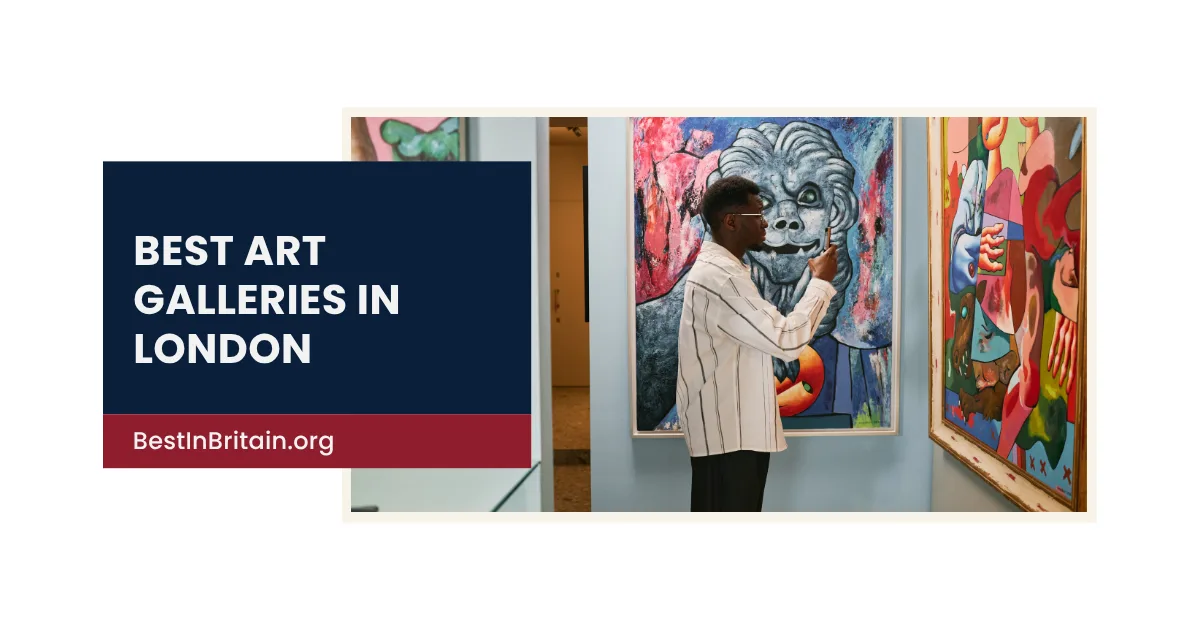
London’s art galleries offer one of the most extensive and varied cultural experiences of any city in the world. Their collections range from Renaissance altarpieces and Dutch portraiture to British landscape painting, Impressionism, modern sculpture, photography, installation and experimental architecture. Many of the capital’s most important collections are also free to visit, making it possible to encounter major works of art without building an expensive itinerary.
The scale of London’s gallery landscape can make deciding where to begin difficult. The National Gallery provides an exceptional introduction to European painting, while Tate Britain follows the development of British art across several centuries. Tate Modern turns a former power station into a setting for international modern and contemporary work, and the National Portrait Gallery approaches British history through the people who shaped it.
Smaller institutions offer equally rewarding experiences. The Courtauld Gallery brings together an unusually concentrated group of Impressionist and Post-Impressionist masterpieces. The Wallace Collection presents paintings, furniture, porcelain and armour inside a historic townhouse, while Dulwich Picture Gallery combines Old Masters with one of the most influential purpose-built gallery designs in Europe. Serpentine replaces a permanent collection with a continually changing programme of contemporary exhibitions and architecture.
This guide brings together eight London galleries that merit a dedicated visit. Each has been selected for the quality and distinctiveness of its collection or exhibition programme, the experience of the building and its value within a wider London itinerary.
Most national collections are free to enter, although temporary exhibitions may require paid tickets. Opening hours, room closures and exhibition arrangements can change, so visitors should check the official gallery website before travelling.
The National Gallery
Editorially SelectedView this post on Instagram
Media credits: nationalgallery
Business details
Address
Trafalgar Square, London, WC2N 5DN
Contact details: +44 20 7747 2885
Standard operating hours:
- Saturday to Thursday: 10:00 AM to 7:00 PM
- Friday: 10:00 AM to 9:00 PM
Admission: Free for the permanent collection; charges apply to selected exhibitions
The National Gallery is one of the strongest starting points for anyone exploring art in London. Its collection traces the development of European painting from the mid-13th century to the beginning of the 20th century, bringing together works that demonstrate how artistic ideas, techniques and subjects changed across more than 600 years.
The collection is significant not simply because it contains famous names, but because visitors can follow relationships between artists and movements in remarkable depth. Early religious painting gives way to the intellectual and technical experimentation of the Renaissance, followed by the dramatic compositions of the Baroque, the precision of Dutch domestic scenes, British landscape painting and the transformation of colour and light associated with Impressionism and Post-Impressionism.
Artists represented include Leonardo da Vinci, Botticelli, Raphael, Titian, Caravaggio, Velázquez, Rembrandt, Vermeer, Turner, Constable, Monet, Degas, Cézanne and Van Gogh. Many visitors arrive with a shortlist of recognised works, but some of the gallery’s greatest pleasures come from seeing how those paintings relate to neighbouring pictures.
Jan van Eyck’s The Arnolfini Portrait rewards close attention to surface, symbolism and reflection. Leonardo’s The Virgin of the Rocks demonstrates his ability to create atmosphere through light and landscape. Velázquez’s The Rokeby Venus, Turner’s The Fighting Temeraire and Van Gogh’s Sunflowers belong to different centuries, yet each shows how painters used familiar subjects to develop a distinctive visual language.
The Sainsbury Wing is central to the visitor experience. It houses many of the earliest works in the collection and provides the principal public entrance. From there, visitors can move through Italian, Spanish, Dutch, Flemish, French and British painting without needing to follow every room in strict order.
A full survey of the collection can take most of a day, but the gallery is often more rewarding when approached selectively. Choosing one period, school or group of artists allows time to look rather than simply move between famous names.
Free talks, guided tours and digital resources provide useful context for visitors who want to understand techniques, symbolism or historical background. Temporary exhibitions examine individual artists, periods and artistic exchanges in greater detail, usually through separately ticketed entry.
The gallery’s Trafalgar Square location also makes it particularly convenient. The National Portrait Gallery is immediately beside it, while the Royal Academy, Somerset House, Covent Garden and the commercial galleries of Mayfair are all accessible on foot.
Best for
- First-time visitors to London’s art collections
- European painting from the Renaissance to the 19th century
- Recognised masterpieces and major art-historical movements
- A free cultural visit in central London
- Combining several galleries within one itinerary
What to know before visiting
- General admission is free
- Paid tickets are normally required for major temporary exhibitions
- Advance general-admission booking can be useful at busy times
- Some rooms may close temporarily for conservation or display changes
- The collection is too extensive to appreciate fully in a rushed visit
Editorial tip
Choose five or six paintings before arriving and build the visit around them. Allowing time for unexpected discoveries usually produces a more memorable experience than attempting to complete every room.
Tate Modern
Editorially SelectedBusiness details
Address
Bankside, London, SE1 9TG
Contact details: +44 20 7887 8888
Operating hours:
- Sunday to Thursday: 10:00 AM to 6:00 PM
- Friday to Saturday: 10:00 AM to 9:00 PM
Admission: Free for the permanent collection; charges apply to selected exhibitions
Tate Modern is London’s principal gallery for international modern and contemporary art. Housed inside the former Bankside Power Station, it combines an internationally significant collection with one of the capital’s most recognisable cultural buildings.
The conversion preserved the industrial scale of the original structure rather than concealing it. The Turbine Hall, once occupied by electricity-generating machinery, became an immense public space capable of accommodating installations and commissions that would be impossible in a conventional gallery.
This architecture gives Tate Modern an immediate sense of drama, but the building is not merely a backdrop. Artists commissioned to work in the Turbine Hall have frequently responded to its height, volume, history and movement of visitors, turning the space itself into part of the artwork.
The collection covers painting, sculpture, photography, film, performance, installation and conceptual practice. Artists associated with Cubism, Surrealism, Abstract Expressionism, Pop Art, Minimalism and other major movements appear alongside work addressing politics, colonialism, migration, gender, identity, technology and environmental change.
Visitors may encounter work by Pablo Picasso, Salvador Dalí, Henri Matisse, Mark Rothko, Louise Bourgeois, Andy Warhol and many other internationally important figures. Displays are periodically reorganised, so particular works are not guaranteed to be on view during every visit.
Unlike galleries that rely on a strict chronological route, Tate Modern often arranges works around themes, ideas or artistic questions. A single room may bring together artists from different countries and decades to examine how they approached materials, cities, bodies, conflict or abstraction.
This structure can reveal connections that a conventional timeline might miss. It also means first-time visitors may find the layout less immediately intuitive than the National Gallery or Tate Britain. The floor map and room descriptions are useful for deciding where to concentrate.
The Blavatnik Building expanded Tate Modern with additional galleries, live-art spaces and elevated views across the city. Its architecture contrasts with the long horizontal mass of the original power station while remaining connected to the industrial character of the site.
Temporary exhibitions often focus on major international artists or broad historical developments and require paid admission. The free collection displays remain substantial enough for a complete visit without purchasing an exhibition ticket.
Tate Modern’s position on the South Bank adds considerably to its appeal. Borough Market, Shakespeare’s Globe and the Millennium Bridge are nearby, and crossing the bridge provides a direct route towards St Paul’s Cathedral and the City of London.
Best for
- International modern and contemporary art
- Large-scale installations and experimental media
- Visitors interested in architecture as well as art
- Free evening visits on Fridays and Saturdays
- Combining culture with a walk along the Thames
What to know before visiting
- The permanent collection is free
- Major temporary exhibitions are separately ticketed
- Collection displays and individual artworks change periodically
- The building is extensive and can require considerable walking
- The thematic layout is easier to navigate with a floor map
Editorial tip
Select two or three collection areas rather than trying to cover the entire building. Leave enough time for the Turbine Hall and the architecture, which are fundamental parts of the Tate Modern experience.
The Courtauld Gallery
Editorially SelectedBusiness details
Address
Somerset House, Strand, London, WC2R 0RN
Contact details: Use the current enquiry information published on the gallery website
Operating hours:
- Monday to Sunday: 10:00 AM to 6:00 PM
- Last entry: 5:15 PM
- Selected late openings may be scheduled for particular exhibitions
Admission: Paid admission; free entry and concessions are available to eligible visitors
The Courtauld Gallery offers one of London’s most concentrated encounters with European art. Although substantially smaller than the National Gallery or either Tate, its collection contains an exceptional sequence of works from the Renaissance to the 20th century.
The gallery is located within Somerset House, where the historic setting provides an elegant framework for a collection built through scholarship, philanthropy and private collecting. Its manageable scale allows visitors to spend time with individual works without the fatigue that can accompany a vast national museum.
The Courtauld is best known for its Impressionist and Post-Impressionist paintings. Édouard Manet’s A Bar at the Folies-Bergère is among the defining works of modern European painting, combining a public entertainment setting with an ambiguous and psychologically complex encounter between viewer and subject.
Vincent van Gogh’s Self-Portrait with Bandaged Ear is equally direct, recording a period of personal crisis through controlled colour and an unflinching study of the artist’s own appearance. Pierre-Auguste Renoir’s La Loge examines spectatorship and social presentation, while works by Monet, Degas, Cézanne, Gauguin and Seurat demonstrate the varied directions taken by artists who transformed European painting in the late 19th century.
The collection is not limited to this celebrated group. Earlier galleries include Renaissance paintings, religious works, portraits, drawings and decorative art. These provide a longer historical context before the visitor reaches the modern rooms.
The gallery’s sequencing is one of its strengths. Rather than presenting isolated masterpieces without explanation, it shows how painters inherited and challenged established ways of representing space, bodies, landscape and modern life.
The Courtauld is closely connected to an internationally respected centre for art history, conservation and curatorial research. That academic foundation is visible in the interpretation of its collection and in temporary exhibitions, which often examine one artist, group of works or research question in considerable depth.
Admission is paid, distinguishing it from London’s large national galleries. The value lies in the sustained quality of the collection and the ability to explore it properly within a relatively compact visit.
Somerset House is also an important part of the day. Its courtyard, riverside terraces and central position make the gallery easy to combine with Covent Garden, the Strand, the South Bank or the National Gallery.
Best for
- Impressionist and Post-Impressionist painting
- Visitors who prefer a compact and coherent collection
- Manet, Van Gogh, Cézanne and Renoir
- Closely researched temporary exhibitions
- Combining art with Somerset House and Covent Garden
What to know before visiting
- General admission is paid
- Ticket prices vary according to exhibitions and eligibility
- Advance booking is recommended for popular exhibitions
- The collection can usually be explored comfortably within two hours
- Last entry is earlier than the gallery’s closing time
Editorial tip
Do not rush directly to the Impressionist rooms. The earlier galleries make the later works more meaningful by showing the visual traditions that modern painters inherited and transformed.
Tate Britain
Editorially SelectedView this post on Instagram
Media credits: tate
Business details
Address
Millbank, London, SW1P 4RG
Contact details: +44 20 7887 8888
Operating hours:
- Monday to Sunday: 10:00 AM to 6:00 PM
Admission: Free for the permanent collection; charges apply to selected exhibitions
Tate Britain provides the most coherent overview of British art available in a single London gallery. Its displays span several centuries, allowing visitors to examine how artists responded to changes in monarchy, religion, landscape, industry, empire, class, technology and national identity.
A broadly chronological route makes Tate Britain particularly accessible. Rather than requiring visitors to understand a thematic arrangement immediately, it allows artistic developments to emerge over time.
Earlier rooms establish the role of portraiture and public status before the collection expands into landscape, Romanticism, Victorian art, modernism and contemporary practice. Artists represented include William Blake, Thomas Gainsborough, John Constable, the Pre-Raphaelites, Henry Moore, Barbara Hepworth, Francis Bacon, David Hockney and Bridget Riley.
The gallery’s greatest single strength is its relationship with J.M.W. Turner. Tate holds the world’s largest collection of Turner’s work, enabling visitors to study far more than a handful of celebrated paintings.
The Turner galleries reveal the artist’s range and development. Architectural studies, topographical watercolours, seascapes and historical subjects demonstrate the precision underlying his work, while later paintings show his increasingly radical treatment of colour, atmosphere and light.
Seeing these works together challenges the simplified idea of Turner as only a painter of storms and glowing skies. His work emerges instead as the product of extensive travel, close observation, technical experimentation and engagement with the artistic debates of his time.
The Pre-Raphaelite collection is another major reason to visit. Paintings associated with the movement combine saturated colour, detailed surfaces, literary references and moral or symbolic narratives. They are especially rewarding when viewed in relation to the Victorian culture that shaped them.
Modern and contemporary galleries show how British art moved through abstraction, sculpture, conceptual work, photography, installation and changing approaches to identity. The collection avoids presenting British art as a fixed or isolated tradition, instead showing its relationship with wider international developments.
Tate Britain is generally quieter than Tate Modern and can feel more contemplative. Its Millbank position places it outside the most congested museum districts while remaining accessible from Westminster, Pimlico and Vauxhall.
Temporary exhibitions examine major British artists, periods and themes in greater detail. These are usually ticketed separately, while the collection remains free.
Best for
- British art from the Tudor period to the present
- J.M.W. Turner and the Pre-Raphaelites
- Visitors who prefer a chronological collection
- A calmer alternative to London’s busiest national museums
- Understanding how British art changed across several centuries
What to know before visiting
- Entry to the permanent collection is free
- Temporary exhibitions generally require paid tickets
- The Turner collection deserves a substantial portion of the visit
- The chronological route is helpful for first-time visitors
- Collection displays can change as works are lent or conserved
Editorial tip
Begin with the chronological collection and reserve at least 45 minutes for the Turner galleries. They are extensive enough to function as a significant gallery visit in their own right.
The Wallace Collection
Editorially SelectedBusiness details
Address
Hertford House, Manchester Square, London, W1U 3BN
Contact details: +44 20 7563 9500
Operating hours:
- Monday to Sunday: 10:00 AM to 5:00 PM
Admission: Free for the permanent collection
The Wallace Collection is one of London’s most rewarding historic-house museums. Its combination of Old Master paintings, French decorative arts, furniture, porcelain, sculpture and arms and armour creates an experience unlike that of a conventional picture gallery.
The collection is displayed inside Hertford House, a former private residence overlooking Manchester Square in Marylebone. Richly decorated rooms preserve the atmosphere of aristocratic collecting, allowing visitors to see paintings and objects within interiors closer to those for which many were originally acquired.
This setting matters. A painting is not presented as a solitary object against a neutral wall but as part of a wider visual environment involving furniture, textiles, gilt, porcelain and architectural decoration.
The painting collection includes work by Titian, Velázquez, Rubens, Van Dyck, Rembrandt, Canaletto and Fragonard. Frans Hals’s The Laughing Cavalier is the best-known individual picture, celebrated for the immediacy of its expression, the confidence of the sitter and the extraordinary handling of embroidered fabric.
The broader collection is just as important. The Wallace Collection is particularly strong in 18th-century French painting, furniture and decorative art. Cabinets, clocks, porcelain and gilded objects demonstrate the technical ambition of European workshops and the relationship between art, craftsmanship and courtly display.
Visitors interested primarily in painting should still make time for the armouries. These galleries contain European and Asian arms and armour created for warfare, ceremony, status and display.
The craftsmanship can be remarkable. Engraving, gilding, sculptural form and mechanical ingenuity transform protective objects into works of art, while interpretation explains how they were produced and used.
The Wallace Collection’s manageable scale encourages slower looking. It is possible to move through the entire museum in a few hours, but the density of individual rooms rewards a more selective approach.
The covered courtyard provides a central point of orientation and includes the museum restaurant. Manchester Square is also within walking distance of Oxford Street, Baker Street, Marylebone High Street and several smaller cultural institutions.
Best for
- Old Master painting in an intimate setting
- French furniture, porcelain and decorative arts
- European and Asian arms and armour
- A free museum away from the largest tourist crowds
- Visitors interested in historic interiors and private collecting
What to know before visiting
- Entry to the permanent collection is free
- Special exhibitions and events may have separate arrangements
- The museum is closed over selected Christmas dates
- The rooms contain considerably more than paintings
- No general-admission ticket is normally required for the collection
Editorial tip
Allow the objects and interiors to shape the visit rather than concentrating only on familiar paintings. The dialogue between fine art, furniture, porcelain and armour is what makes the Wallace Collection distinctive.
Dulwich Picture Gallery
Editorially SelectedView this post on Instagram
Media credits: dulwichgallery
Business details
Address
Gallery Road, Dulwich, London, SE21 7AD
Contact details: +44 20 8693 5254
Operating hours:
- Monday: Closed
- Tuesday to Sunday: 10:00 AM to 5:00 PM
- Bank-holiday arrangements may vary
Admission: Paid admission; concessions and free-entry arrangements are available to eligible visitors
Dulwich Picture Gallery offers an unusually complete union of art, architecture and setting. Opened in 1811, it is widely recognised as the world’s first purpose-built public art gallery and remains one of the most influential early examples of museum design.
Sir John Soane designed the building around the requirements of displaying paintings. Its sequence of interconnected rooms, carefully controlled proportions and roof lanterns introduced principles that later became central to gallery architecture.
Natural light enters from above rather than through conventional side windows, reducing distraction and creating a consistent environment for viewing art. This solution was practical, but it also gave the rooms a distinctive rhythm and atmosphere.
The architecture is inseparable from the collection. Unlike a converted palace or repurposed industrial building, Dulwich Picture Gallery was conceived specifically to bring visitors and paintings together.
The collection is particularly strong in European art of the 17th and 18th centuries. Works by Rembrandt, Rubens, Poussin, Canaletto, Gainsborough and Murillo are displayed across a relatively compact group of rooms.
This scale allows visitors to compare paintings without feeling overwhelmed. Portraiture, religious subjects, landscapes and historical scenes can be explored at a pace that is difficult to sustain in a much larger museum.
The central mausoleum adds another dimension to the building. Designed to house the remains of the gallery’s founders, it gives the architecture an emotional and commemorative centre as well as a functional one.
Dulwich also presents temporary exhibitions that broaden the programme beyond its historic collection. These may examine individual artists, illustration, modern painting, photography or relationships between contemporary work and the Old Masters.
The surrounding gardens and sculpture spaces extend the experience beyond the gallery rooms. Family activities, creative programmes and a café make the site suitable for a longer half-day visit rather than a brief museum stop.
Its south London location requires more planning than Trafalgar Square or Bankside, but the journey is part of its appeal. Dulwich Village, Dulwich Park and the surrounding residential streets provide a markedly different atmosphere from central London.
Best for
- Old Master painting in a manageable collection
- Visitors interested in museum architecture
- A quieter cultural visit in south London
- Combining an exhibition with gardens and a café
- A half-day itinerary around Dulwich Village
What to know before visiting
- The gallery is closed on Mondays
- General admission is paid
- Advance booking is recommended for exhibitions and busy periods
- The Sculpture Garden has separate opening arrangements
- Bank-holiday hours may differ from the normal schedule
Editorial tip
Allow time to examine the building itself. The roof lanterns, room sequence and central mausoleum are fundamental to understanding why Dulwich Picture Gallery is so important.
National Portrait Gallery
Editorially SelectedView this post on Instagram
Media credits: nationalportraitgallery
Business details
Address
St Martin’s Place, London, WC2H 0HE
Contact details: +44 20 7306 0055
Operating hours:
- Sunday to Thursday: 10:30 AM to 6:00 PM
- Friday to Saturday: 10:30 AM to 9:00 PM
Admission: Free for the permanent collection; charges apply to selected exhibitions
The National Portrait Gallery approaches art and history through representations of people. Its collection brings together monarchs, writers, scientists, campaigners, politicians, actors, musicians, athletes and other figures whose lives contributed to British history and culture.
This focus makes the gallery accessible to visitors who may not ordinarily organise an art visit around periods, schools or artistic movements. Each portrait introduces two interconnected subjects: the person represented and the choices made by the artist.
Portraits communicate far more than physical appearance. Clothing, pose, expression, setting and symbols can present authority, intellect, wealth, celebrity, vulnerability or rebellion. Photography and moving image add further questions about public identity and the construction of reputation.
The collection includes painting, sculpture, drawing, photography, film and digital work. Its chronological route begins with Tudor and Stuart Britain before moving through the 18th and 19th centuries into the modern and contemporary period.
Historic displays introduce figures associated with monarchy, literature, science, politics and exploration. Later rooms show how technological change, mass media and popular culture expanded both the subjects and methods of portraiture.
The gallery’s 2023 reopening followed a major redevelopment that improved entrances, public spaces and the presentation of the collection. Beginning on the upper floor and moving down chronologically remains one of the clearest ways to understand the displays.
The photography collection is especially important. It shows how the camera changed portraiture by increasing its reach while introducing new forms of staging, intimacy, documentation and manipulation.
Contemporary displays broaden the definition of national significance and examine whose lives are represented within public collections. This creates a gallery that is not only concerned with established historical status but also with changing ideas of achievement, identity and cultural influence.
Temporary exhibitions frequently examine individual photographers, artists, public personalities or themes within portraiture. These are normally ticketed separately, while the main collection remains free.
Its position beside the National Gallery makes the two institutions easy to combine. However, the Portrait Gallery has enough range to justify an independent visit, particularly for visitors interested in biography, photography or social history.
Best for
- British history explored through individual lives
- Portrait painting, photography and sculpture
- Visitors interested in biography and public identity
- A free central London gallery
- Evening visits on Fridays and Saturdays
What to know before visiting
- Entry to the permanent collection is free
- Major temporary exhibitions are separately ticketed
- Last admission to exhibitions is earlier than general closing time
- The gallery begins closing shortly before the stated time
- Starting on the upper floor provides the clearest chronological route
Editorial tip
Look beyond whether a portrait resembles its subject. Consider what the pose, clothing, background and composition are intended to communicate about the person and the period.
Serpentine
Editorially SelectedAddresses:
- Serpentine South: Kensington Gardens, London, W2 3XA
- Serpentine North: West Carriage Drive, London, W2 2AR
Contact details: +44 20 7402 6075
Standard operating hours for both galleries:
- Monday: 12:00 PM to 6:00 PM
- Tuesday to Friday: 10:00 AM to 6:00 PM
- Saturday to Sunday: 10:00 AM to 7:00 PM
Admission: Free
Serpentine offers a different proposition from London’s collection-based museums. Rather than maintaining a permanent historical display, its two galleries in Kensington Gardens present a changing programme of contemporary exhibitions, commissions, research and public events.
The absence of a permanent collection means each visit is shaped by the programme currently on view. Painting, sculpture, installation, film, sound, digital work, architecture and interdisciplinary practice may all appear across the year.
Serpentine South occupies a former tea pavilion close to the Serpentine lake. Its relatively intimate galleries can transform considerably between exhibitions, allowing artists to respond closely to the scale and character of the building.
Serpentine North stands across the bridge in a converted former gunpowder store, accompanied by an extension designed by Zaha Hadid Architects. The contrast between the historic brick structure and the later flowing roof makes the building an architectural destination in its own right.
The walk between the two galleries is part of the visit. Rather than moving through a single museum complex, visitors cross Kensington Gardens and experience the landscape, lake and public life of the park between exhibitions.
Serpentine’s programme frequently explores the relationship between contemporary art and wider questions involving technology, ecology, architecture, community and social change. This can produce exhibitions that are immersive or immediately accessible, as well as projects that ask visitors to spend more time with unfamiliar ideas.
The annual Serpentine Pavilion is one of London’s most prominent architectural commissions. Each summer, an architect or design practice creates a temporary structure beside Serpentine South.
The pavilion operates simultaneously as an architectural experiment, social meeting place and setting for public events. Its temporary nature allows designers to explore materials, space and participation without the restrictions associated with a permanent building.
Because Serpentine’s programme changes, checking the current exhibitions is particularly important. Visitors should also confirm whether both galleries are open, as installation periods and special events can affect access.
Admission is free, making Serpentine easy to include within a wider day around Kensington Gardens and Hyde Park. The Royal Albert Hall, the V&A, the Natural History Museum and the Design Museum are also within the surrounding cultural district.
Best for
- Contemporary and experimental art
- Visitors interested in architecture and public space
- Free exhibitions within Kensington Gardens
- The annual Serpentine Pavilion
- Combining culture with a walk through the park
What to know before visiting
- There is no permanent collection
- Exhibitions change throughout the year
- Both gallery spaces should be checked before travelling
- Installation periods can affect opening arrangements
- Pavilion hours may differ on event dates
Editorial tip
Visit both Serpentine South and Serpentine North. The walk through Kensington Gardens and the contrast between the two buildings are essential parts of the experience.
How to choose the right London art gallery
The strongest choice depends on what visitors want to see and how they prefer to experience art.
Choose The National Gallery for a broad introduction to European painting and some of the most recognised works in London.
Choose Tate Modern for international modern and contemporary art, large installations and the architecture of Bankside Power Station.
Choose The Courtauld Gallery for a compact collection with exceptional Impressionist and Post-Impressionist paintings.
Choose Tate Britain for the clearest chronological account of British art and the world’s largest collection of work by J.M.W. Turner.
Choose The Wallace Collection for Old Masters, French decorative art and armour displayed within a historic townhouse.
Choose Dulwich Picture Gallery for an intimate Old Master collection and one of the most influential purpose-built gallery buildings in Europe.
Choose The National Portrait Gallery for British history, photography and representations of people from the Tudor period to the present.
Choose Serpentine for changing contemporary exhibitions, experimental architecture and a cultural walk through Kensington Gardens.
Comparing London’s leading art galleries
| Gallery | Area | Principal focus | General admission | Best suited to |
|---|---|---|---|---|
| The National Gallery | Trafalgar Square | European painting | Free | First visits and recognised masterpieces |
| Tate Modern | Bankside | Modern and contemporary art | Free | Installations, international art and architecture |
| The Courtauld Gallery | Somerset House | European art and Impressionism | Paid | Compact, high-quality collections |
| Tate Britain | Millbank | British art | Free | Turner, the Pre-Raphaelites and historical context |
| The Wallace Collection | Marylebone | Old Masters and decorative arts | Free | Historic interiors, furniture and armour |
| Dulwich Picture Gallery | Dulwich | Old Master painting | Paid | Architecture and a quieter half-day visit |
| National Portrait Gallery | Trafalgar Square | British portraiture | Free | History, biography and photography |
| Serpentine | Kensington Gardens | Contemporary exhibitions | Free | Experimental art and architecture |
A two-day London art itinerary
Day one: Trafalgar Square, Soho and Somerset House
Begin at the National Gallery shortly after opening. Select one or two periods rather than trying to cover the complete collection, then continue next door to the National Portrait Gallery.
After lunch, walk through Covent Garden towards Somerset House for an afternoon visit to The Courtauld Gallery. This route brings together European painting, British history and Impressionism without requiring public transport between venues.
Visitors with additional time can continue along the Strand or cross Waterloo Bridge for views over the Thames.
Day two: British art and Bankside
Start at Tate Britain and follow the chronological collection before spending time in the Turner galleries.
Continue towards Tate Modern by Underground, bus or river service. The river journey is particularly appropriate because it connects the two Tate institutions while showing how their different London settings shape each gallery.
Spend the afternoon exploring selected collection displays at Tate Modern, then cross the Millennium Bridge towards St Paul’s Cathedral.
An alternative day for smaller galleries
Visitors who prefer quieter and more compact collections can begin at the Wallace Collection, walk through Marylebone and continue towards central London.
Alternatively, make a dedicated journey to Dulwich Picture Gallery and combine it with Dulwich Village and Dulwich Park. Serpentine can anchor another half-day involving Kensington Gardens and the museums of South Kensington.
Planning an art-gallery visit in London
London’s largest galleries can become busy during weekends, school holidays and major exhibitions. Arriving close to opening time generally provides a calmer experience and easier access to popular rooms.
Advance booking is advisable for paid exhibitions and useful even where free timed admission is available. Visitors should check whether bags, luggage or photography equipment are subject to restrictions before travelling.
Most major galleries offer step-free access, accessible toilets and mobility support, but the arrangements differ between historic and modern buildings. Anyone with specific access requirements should consult the venue’s official accessibility information.
Gallery fatigue can affect even enthusiastic visitors. One large institution and one smaller collection often produce a more enjoyable day than attempting several major museums in rapid succession.
Taking breaks also improves the quality of the visit. Many galleries have cafés, restaurants, courtyards or nearby public spaces where visitors can pause before returning to the collection.
The most rewarding gallery itineraries balance recognised works with time for discovery. London’s collections are too extensive to complete, which is precisely why they continue to support repeat visits.
Related articles
Related guides

Culture and Attractions
Best Jazz Clubs in London for Live Music
A current guide to six London jazz clubs and live-music venues, covering ticket prices, seating, food, age rules, accessibility, jam sessions and the different styles each venue presents.
Updated 22 July 2026

Culture and Attractions
Best Live Music Venues in London
A current guide to six London live music venues, covering concert formats, standing and seating, accessibility, bag rules, age restrictions, food, ticket fees and choosing the right room.
Updated 13 July 2026
Culture and Attractions
The Best Museums in London for an Inspiring Visit
A comprehensive guide to London’s most rewarding museums, from major national collections to intimate historic houses and family-friendly science attractions.
Updated 8 July 2026
Culture and Attractions
Best botanical gardens in London
A researched guide to London’s finest botanical gardens, historic plant collections, tropical conservatories and carefully designed green spaces.
Updated 26 February 2026
Culture and Attractions
4 exceptional museums to visit in Glasgow
An editorial guide to the leading museums in Glasgow, highlighting Victorian civic art galleries, modern transport exhibits, and historic tenement apartments.
Updated 17 July 2026

Things to Do
Best Ice Skating Rinks in London
A current guide to London's best year-round ice skating rinks, covering public sessions, prices, skate hire, lessons, family rules, accessibility and seasonal rink updates.
Updated 13 July 2026
Know a business we should consider?
Send us the details and our editorial team will review whether it fits a future guide.
Submit businessWriter profile
George Davies
Regional and city guide writer
George covers location led guides, city roundups, regional comparisons, attractions, markets, museums and practical local recommendations.