
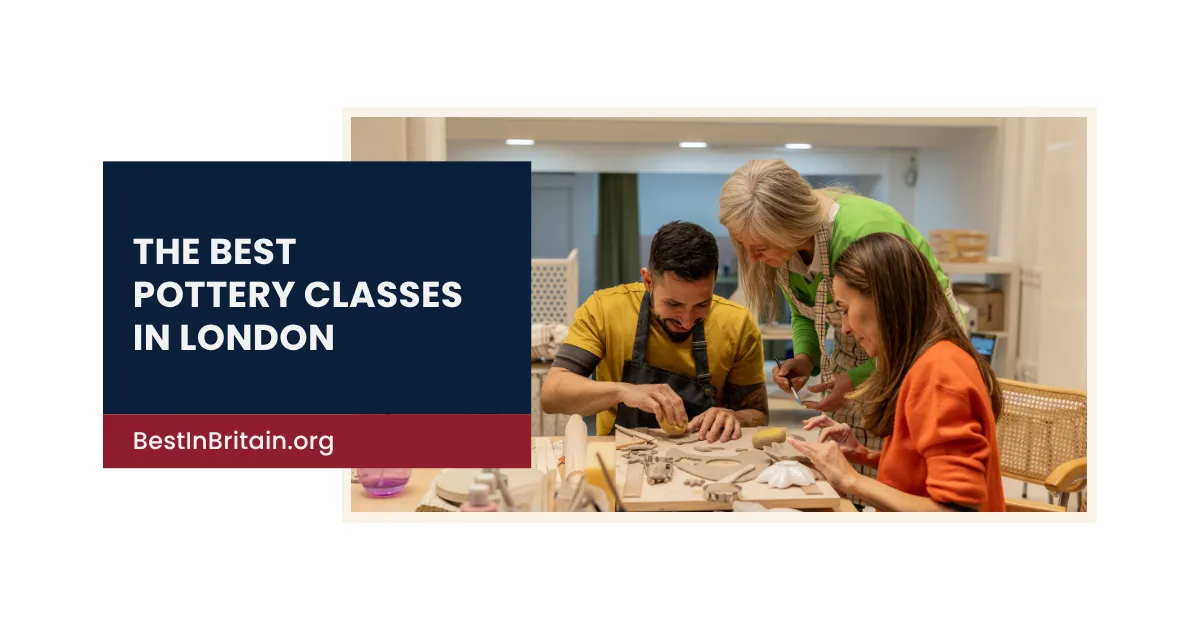
London pottery studios range from beginner-friendly taster classes and social hand-building sessions to structured wheel-throwing courses, specialist masterclasses and open-access memberships for independent makers.
The right studio depends on whether the aim is a one-off creative experience, a serious technical course or regular access to wheels, kilns, glazes and storage.
The six studios below cover meaningfully different formats without turning the guide into a long directory.
What distinguishes a suitable pottery class?
A suitable class should explain the level, teaching format, class size, materials, firing, collection arrangements and cancellation terms before payment.
Check:
- Beginner, intermediate or advanced level
- Wheel throwing, hand-building or mixed techniques
- Number and length of sessions
- Maximum class size
- Whether each student has a wheel
- Clay allowance
- Firing and glazing charges
- Number of finished pieces included
- Collection deadline
- Accessibility
- Age restrictions
- Pregnancy or health guidance
- Cancellation and rescheduling policy
- Whether missed sessions can be replaced
- Whether the class qualifies students for membership
A high course price can still be reasonable where clay, glazing, firing and extended tuition are included. Compare the complete cost rather than only the headline fee.
At a glance
| Studio | Main format | Published price signal | Main strengths | Particularly useful for |
|---|---|---|---|---|
| The Kiln Rooms | Four London studios with classes, drop-ins and memberships | Five-week taster £230; 12-week courses around £390–£415 plus firing weight | Broad progression from beginner courses to independent studio access | Learners wanting several locations and a clear route into membership |
| Crown Works Pottery | Small Bethnal Green school with professional potter-led courses | Specialist two-day workshops commonly £320; five-day workshops £650 | Small groups, technical depth and visiting-artist masterclasses | Intermediate makers and beginners wanting focused tuition |
| Studio Pottery London | Premium Belgravia teaching and members’ studio | Beginner taster £140; five-session hand-building £325; private lesson £150 | Central location, broad curriculum and professional membership facilities | Learners wanting structured central-London tuition |
| Dalston Clay | Community ceramics studio with wellbeing-led sessions | Taster £50; Clay Social from £25 | Wheel throwing, hand-building and mindfulness-informed sessions | Beginners seeking a relaxed and inclusive East London environment |
| Turning Earth | Open-access studio network with courses and monthly membership | Six-week wheel course from £260; eight-week course from £340 | Strong membership model, several locations and a progression route | Learners intending to continue pottery independently |
| Clay Time | Islington and Highgate classes with adult and children’s options | Five-week beginner wheel course £249; one-day course £169; children’s taster £49 | Clear pricing, beginner wheel courses and family provision | First-time throwers and parents seeking children’s wheel sessions |
Course schedules and prices change by term. Check the live booking page before travelling.
How much do pottery classes cost in London?
One-off pottery sessions commonly cost around £40–£150. Multi-week courses generally cost £220–£550, while intensive foundation programmes can exceed £1,000.
Common additional costs include:
- Fired-clay weight
- Extra pieces
- Glazing
- Studio membership
- Tool deposit
- Storage
- Replacement session
- Postage
- Late collection
- Private tuition
- Specialist materials
Ask how many finished pieces are included and how long the studio keeps completed work.
The Kiln Rooms
Editorially SelectedLocations: Farringdon, Bellenden Road, Peckham Levels and Copeland Park
Phone: 07732 038052
Format: Courses, tasters, private sessions, drop-ins and membership
Published prices: Five-week taster £230; Peckham 12-week course around £390; Farringdon 12-week course around £415
Website
The Kiln Rooms operates four London ceramics studios and offers one of the clearest progression routes from beginner tuition into regular independent practice.
Beginners can choose short tasters, five-week introductory courses or longer 12-week courses. Teaching covers wheel throwing, hand-building, trimming, decoration and glazing.
The five-week taster currently costs £230 and includes materials and firing. Longer 12-week courses charge for fired work by weight, currently around £5 per kilogram, so the final cost depends on how much is kept.
The studios also provide drop-in access and memberships for makers with sufficient experience. Membership formats differ between locations, so students should check access hours, storage and technical support before applying.
Private sessions are available and generally cost around £90 per person depending on group size, with materials, firing and VAT included.
Pros
- Four London studio locations
- Beginner, intermediate and membership routes
- Clear five-week course pricing
- Drop-in and private-session options
Best for: Beginners who may want to progress into open studio access and longer-term ceramics practice.
What to confirm: Ask which location hosts the course, how firing is charged and whether completion qualifies for membership.
Crown Works Pottery and School
Editorially SelectedAddress: Crown Works, 11 Temple Street, Bethnal Green, London E2 6QQ
Format: Small-group classes, multi-week courses, intensives and artist-led masterclasses
Published price signal: Two-day specialist workshops commonly £320; five-day courses around £650; two-week foundation course £1,500
Website
Crown Works Pottery is a small Bethnal Green ceramics school offering wheel throwing, hand-building and specialist workshops.
Its classes are taught by practising potters and visiting artists. The programme ranges from short tasters and beginner courses to intermediate masterclasses and intensive foundation training.
Many specialist workshops cap attendance at around eight to ten students. Some courses provide one dedicated wheel per participant, which is valuable where the focus is technical wheel practice.
Pricing varies substantially by format. Two-day workshops commonly cost about £320, five-day courses around £650 and two-week foundation programmes £1,500. Materials, firing and the number of pieces included differ by course.
The studio is particularly relevant to learners who want concentrated technical tuition rather than a casual social session.
Pros
- Small class sizes
- Visiting-artist and specialist workshops
- Wheel-throwing and hand-building routes
- Intensive foundation programmes
Best for: Makers wanting focused technical development and access to visiting professional ceramicists.
What to confirm: Check the required experience level, pieces included, firing limits and cancellation terms for the specific workshop.
Studio Pottery London
Editorially SelectedAddress: 29 Eccleston Place, London SW1W 9NF
Phone: 020 8004 9439
Opening: Tuesday to Thursday, 9.30am–10pm; Friday, 9.30am–8pm; Saturday and Sunday, 10am–8pm
Format: Beginner to advanced classes, private tuition and membership
Published prices: Beginner taster £140; five-session hand-building course £325; private tuition £150
Website
Studio Pottery London is a central Belgravia studio providing beginner classes, structured courses, private tuition and membership for experienced makers.
The programme includes wheel throwing, hand-building, foundation courses, glaze study, tile workshops, pottery painting, children’s sessions and guest masterclasses.
A three-hour beginner taster currently costs £140 and can include up to 14 participants. Five-session hand-building courses cost £325 and are limited to around ten students. Private tuition is £150 for one person or £220 for two.
The members’ area provides ongoing studio access, storage and communal facilities, but membership is priced at the premium end of the London market. Current monthly membership is £417 with a minimum two-month commitment.
The studio’s central position is convenient, although course and membership costs are substantially higher than many east or north London alternatives.
Pros
- Central Belgravia location
- Wide beginner-to-advanced curriculum
- Private tuition and specialist workshops
- Professional members’ studio
Best for: Learners wanting structured tuition or membership in a central London studio.
What to confirm: Ask how many finished pieces are included and whether glazing, firing and collection are part of the class price.
Dalston Clay
Editorially SelectedAddress: Unit 308, 10B Bradbury Street, London N16 8JN
Phone: 07586 258554
Format: Taster sessions, multi-week courses, Clay Socials, private tuition and drop-in access
Published prices: Taster £50; Clay Social from £25
Website
Dalston Clay combines ceramics tuition with a community and wellbeing-led approach.
Its beginner taster introduces both hand-building and wheel throwing during one session. The current Saturday taster costs £50 and runs for around two and a half hours.
Longer six-week courses cover wheel throwing, hand-building, trimming and glazing. They include tools, aprons, clay during teaching and a stated number of fired and glazed pieces.
The studio also runs Clay Social evenings from £25, providing a more informal hand-building experience. Some sessions are designed around queer community participation and a judgement-free environment.
Meditation or grounding exercises may be included in selected courses, but the studio does not operate a general weekly yoga timetable. Students focused solely on technical progression should choose a course whose syllabus and contact time match that aim.
Pros
- Affordable taster and social sessions
- Wheel and hand-building in the introductory class
- Six-week progression courses
- Community and wellbeing-led environment
Best for: Beginners wanting a relaxed East London introduction to both wheel throwing and hand-building.
What to confirm: Check whether meditation is included, how many pieces are fired and whether a missed class can be replaced.
Turning Earth
Editorially SelectedLondon studios: Hoxton, Leyton and Highgate
Format: Multi-week courses, intensives and open-access membership
Published prices: Six-week wheel course from £260; eight-week ceramics or wheel course from £340; firing charged at £2.50 per 500g
Website
Turning Earth operates open-access ceramics studios in Hoxton, Leyton and Highgate.
Its courses are designed as a route into independent studio membership. Beginners can choose mixed ceramics courses covering hand-building and throwing or wheel-only programmes lasting six, eight or twelve weeks.
A six-week introduction to wheel throwing starts from £260, while eight-week courses start from £340. Tuition, clay, glazes and equipment use are included, but firing is charged separately at £2.50 per 500g.
Membership provides regular studio access, storage, communal equipment and firings under a monthly model. It is intended for makers who want to work independently rather than rely on scheduled teaching every time.
Turning Earth also runs intensive courses and professional-maker support at selected locations.
Pros
- Hoxton, Leyton and Highgate locations
- Strong progression from beginner class to membership
- Wheel-only and mixed-technique courses
- Open-access studio model
Best for: Learners who want to build enough skill to continue independently through studio membership.
What to confirm: Ask which course qualifies for membership, the access-hour limit and how storage and firing are managed.
Clay Time
Editorially SelectedLondon studios: Islington and Highgate
Format: Adult wheel courses, one-day intensives, hand-building, painting and children’s sessions
Published prices: Five-week beginner wheel course £249; six-week improvers course £299; one-day wheel course £169; children’s wheel taster £49
Website
Clay Time offers clearly structured wheel-throwing and hand-building courses in Islington and Highgate.
Its five-week beginner wheel course costs £249 and includes six glazed and fired pots. Students learn centring, cylinders, bowls, trimming and glazing, with one wheel allocated to each learner during the course.
A one-day throwing intensive costs £169 and includes tuition, materials, firing and up to five glazed pieces. Improvers courses are available for students who have completed a beginner programme.
Clay Time also provides children’s wheel tasters, currently priced at £49, alongside hand-building and pottery-painting sessions. This makes it one of the most useful options for families in the selection.
Extra pieces carry an additional firing charge, and collection deadlines should be checked when booking.
Pros
- Clear adult and children’s prices
- Beginner, one-day and improvers wheel courses
- Finished pieces included in course fees
- Islington and Highgate locations
Best for: First-time wheel throwers and families seeking children’s pottery sessions.
What to confirm: Ask how many pieces are included, when finished work will be ready and how long it will be held.
Wheel throwing, hand-building or pottery painting?
Wheel throwing
Clay is centred and shaped on a rotating wheel. It requires repetition and is best learned through a multi-session course.
Hand-building
Objects are formed using pinch, coil and slab techniques. It is accessible to beginners and allows sculptural or irregular forms.
Pottery painting
Participants decorate pre-fired bisque ware. It is a creative ceramics activity but does not teach clay construction or throwing.
Mixed course
A mixed course introduces throwing, hand-building, trimming and glazing. It is useful for beginners who have not yet chosen a preferred technique.
One-off taster or multi-week course?
Taster
Best for testing interest or arranging a social activity. Contact time is limited and the studio may finish or glaze pieces after the session.
Multi-week course
Allows repetition, trimming, glazing and feedback across the making cycle.
Intensive
Compresses learning into one or several full days. It can be demanding but useful for people unable to attend weekly.
Private lesson
Provides individual attention and can target a particular technique. It is usually the most expensive format per hour.
What does the class price include?
Ask whether the fee includes:
- Clay
- Tools
- Apron
- Glazes
- Bisque firing
- Glaze firing
- Number of pieces
- Extra weight
- Studio practice
- Storage
- Postage
- VAT
The phrase “materials included” does not always include firing every piece made.
Firing and collection
Pottery needs to dry before bisque firing and usually returns to the kiln after glazing.
Completed work may take several weeks.
Check:
- Expected collection date
- Collection notification
- Holding period
- Postage option
- Breakage policy
- Extra firing cost
- What happens to uncollected work
Kiln firing involves risk, and studios cannot always guarantee that every piece will survive.
Studio membership
Membership suits makers able to work independently and safely.
Ask about:
- Required experience
- Induction
- Monthly access hours
- Wheel booking
- Storage
- Clay purchase
- Glazes
- Firing allowance
- Technical support
- Guest access
- Notice period
- Minimum term
- Production limits
A course does not automatically qualify a student for every studio’s membership.
Class size and teaching attention
A class of ten to fourteen people can work well where every participant has equipment and the tutor has technical support.
For wheel throwing, ask whether:
- Every student has a wheel
- Demonstrations are visible
- Assistants are present
- Individual corrections are provided
- The class mixes experience levels
Private or very small-group tuition is more appropriate for learners needing intensive feedback.
Accessibility and physical demands
Pottery can involve stairs, bending, lifting clay, wheel pedals, prolonged sitting and dusty materials.
Ask about:
- Step-free entrance
- Accessible toilet
- Adjustable wheel or table
- Seating
- Hand strength requirements
- Dust controls
- Ventilation
- Assistance with lifting
- Sensory environment
- Companion arrangements
Wheel throwing is not the only route; hand-building may be easier to adapt.
Children’s pottery classes
Check:
- Minimum age
- Parent participation
- Safeguarding
- Class duration
- Wheel allocation
- Clothing requirements
- Collection arrangements
- Whether finished work is included
Children should be supervised according to the studio’s policy and given age-appropriate equipment and instruction.
Pregnancy and health considerations
Clay work is generally low risk, but studios may have their own guidance around prolonged wheel use, heavy lifting, glazes and dust.
Tell the studio about:
- Pregnancy
- Respiratory condition
- Skin sensitivity
- Back pain
- Mobility limitation
- Recent surgery
Avoid eating in working areas and wash hands before handling food.
Cancellation and missed sessions
Policies vary substantially.
Check:
- Notice period
- Refund
- Rescheduling
- Replacement class
- Transfer to another person
- Course cancellation
- Illness
- Studio closure
- Gift-voucher expiry
Multi-week courses may not provide make-up sessions for every absence.
Questions to ask before booking
- Is the class suitable for a complete beginner?
- Will I use a wheel?
- Does everyone have their own wheel?
- How many students are in the class?
- Are clay and firing included?
- How many pieces can I keep?
- When will work be ready?
- What is the collection deadline?
- Can I replace a missed session?
- Is the studio step-free?
- Does the course qualify me for membership?
- What should I wear?
Common warning signs
Be cautious where:
- The class type is unclear
- Firing costs are omitted
- No collection timetable is provided
- Class size is not stated
- Every student is not guaranteed equipment
- Cancellation terms are absent
- The studio makes unrealistic claims about wellbeing
- Safety or dust controls cannot be explained
- Membership costs are unclear
- The course is labelled advanced without prerequisites
Frequently asked questions
Is wheel throwing difficult?
It takes repetition. A one-off class can introduce the technique, but a multi-week course gives more time to develop control.
Will I take my pottery home the same day?
Usually not. Clay must dry and be fired, which can take several weeks.
Are materials included?
Often, but firing or extra pieces may cost more. Check the exact terms.
What should I wear?
Wear comfortable clothes and closed shoes that can get dirty. Keep nails short for wheel throwing where practical.
Can children use a pottery wheel?
Yes, where the studio offers age-appropriate sessions and supervision.
Do I need my own tools?
Beginner classes usually provide tools. Members and advanced makers may prefer personal tools.
Is pottery suitable for a date or group event?
Yes. Taster, hand-building and pottery-painting sessions are especially suitable for social bookings.
Choosing with confidence
The Kiln Rooms offers the broadest progression across multiple studios, while Crown Works is especially useful for small technical workshops and intensive courses.
Studio Pottery London provides a premium central setting with an extensive curriculum. Dalston Clay offers an affordable community and wellbeing-led format.
Turning Earth is the clearest choice for learners intending to move into open-access membership, while Clay Time adds straightforward beginner pricing and children’s wheel classes.
Choose according to technique, class size, firing costs, location and whether the aim is a one-off experience or an ongoing ceramics practice.
Related articles
Related guides

Business Services
Best axe throwing venues in London
A practical guide to London’s best axe throwing venues for dates, birthdays, corporate events and competitive group nights out.
Updated 21 July 2026

Business Services
Top orthopaedic specialists in London
A practical guide to London orthopaedic specialists, comparing knee, hip, shoulder, spine, hand and foot expertise, consultation fees, hospital access and non-surgical care.
Updated 16 July 2026

Business Services
Top private investigators in London
A practical guide to London private investigators, comparing surveillance, tracing, corporate investigations, digital evidence, pricing and data-protection standards.
Updated 16 July 2026

Business Services
Top Places to Buy West End Theatre Tickets in London
A practical guide to buying West End theatre tickets through official box offices, discount booths, established agents, rush releases and ticket lotteries.
Updated 14 July 2026

Business Services
Top Professional Organisers in London
A researched guide to six London professional organisers offering decluttering, home organisation, wardrobe editing, move management, downsizing, paperwork support and storage planning.
Updated 9 July 2026

Business Services
Best Maid and Domestic Cleaning Agencies in London
A practical guide to London maid agencies, domestic cleaning platforms and specialist cleaning companies, with current prices, service models, insurance details and booking considerations.
Updated 7 July 2026
Know a business we should consider?
Send us the details and our editorial team will review whether it fits a future guide.
Submit businessWriter profile
George Davies
Regional and city guide writer
George covers location led guides, city roundups, regional comparisons, attractions, markets, museums and practical local recommendations.