
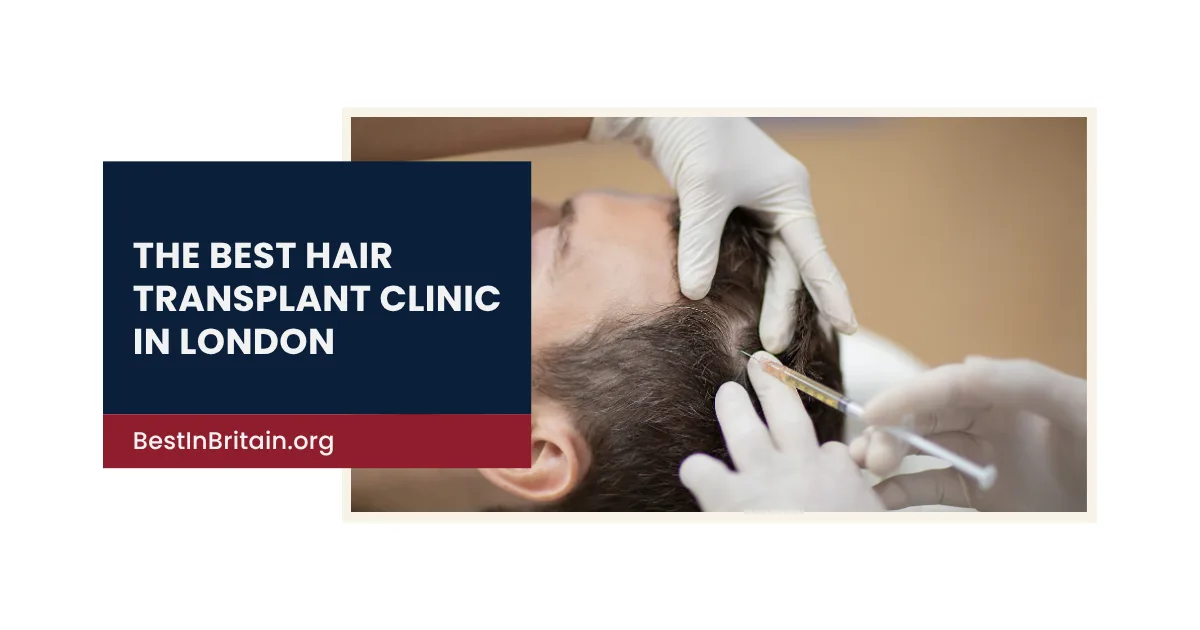
A hair transplant is permanent surgery, not a routine grooming treatment. Follicles are removed from a limited donor area and placed into thinning or bald regions, so poor planning can leave visible scarring, overharvested donor zones or an unnatural hairline that is difficult to correct.
The right clinic should begin with diagnosis and long-term planning rather than a graft target. Pattern hair loss can continue after surgery, and some forms of diffuse thinning, scarring alopecia or medically driven hair loss may make transplantation unsuitable.
The six providers below represent several different approaches to hair-restoration surgery in London. They include surgeon-led clinics, established FUE providers, practices discussing both FUE and FUT, a recently inspected Fulham clinic and a treatment facilitator offering UK and overseas pathways.
The most suitable provider depends on the diagnosis, donor supply, likely progression of hair loss, preferred scarring pattern and the named surgeon responsible for the operation. No clinic can guarantee density, graft survival or satisfaction, and a transplant does not prevent untreated native hair from continuing to thin.
What distinguishes a responsible hair-transplant clinic?
A responsible service should begin with diagnosis and donor assessment rather than a sales target for graft numbers. The patient should know the legal provider, exact surgical address, named surgeon, CQC status and which team member performs extraction, recipient-site creation and implantation.
The consultation should explain whether surgery is appropriate now, what non-surgical options exist, how future loss will affect the design and what donor capacity should be preserved for later life. A natural result depends on direction, angle, distribution and long-term planning rather than graft count alone.
Pricing should be supplied in writing with medication, blood tests, postoperative care and any optional treatments clearly separated. Reviews and early postoperative photographs can illustrate an individual experience, but they do not establish final growth or clinical quality.
This is general editorial information rather than medical advice.
How much does a hair transplant cost in London?
A broad range of £1,500 to £10,000 can be misleading. The lower end is more typical of some overseas packages than surgeon-led London surgery, while complex UK procedures can exceed £10,000.
Current published examples include:
- Mittal Hair Clinic: approximately £3 to £3.50 per graft for a virgin donor area, with repair work priced separately
- Harley Street Hair Clinic: published range of £2,000 to £15,000
- Longevita-facilitated London treatment: from £3,000
- FKS Clinic: general published UK range of £3,000 to £10,000
- Other London clinics: individual quotation after consultation
The number of “grafts” is not the same as the number of hairs. One follicular unit can contain one or several hairs.
Ask whether the quotation includes:
- Surgeon consultation
- Blood tests
- Medication
- Anaesthesia
- Graft extraction
- Recipient-site creation
- Implantation
- PRP
- Postoperative wash
- Dressings
- Travel
- Hotel
- Aftercare
- Review appointments
- VAT
- Corrective treatment
- Prescriptions for future hair-loss management
Do not compare price per graft without confirming who performs the surgery and whether graft counting is independently documented.
FUE, FUT and DHI
FUE
Follicular unit excision removes individual follicular units using small punches. It avoids one long linear donor scar but creates many tiny scars and can still produce visible thinning if the donor is overharvested.
FUT
Follicular unit transplantation removes a strip of donor scalp, which is divided into grafts under magnification. It leaves a linear scar but can preserve donor density efficiently in selected patients.
DHI
Direct Hair Implantation is generally a method of placing grafts using implanter pens rather than a separate biological form of transplantation. Clinics use the term differently, so ask exactly how extraction, incision-making and implantation are performed.
Sapphire FUE
“Sapphire” refers to the material used for recipient-site blades. It does not by itself prove better survival, density or naturalness.
Technique should follow diagnosis, donor capacity, hairstyle and scarring preference rather than marketing.
The Mittal Hair Clinic
Editorially SelectedBusiness details
Address
111 Charterhouse Street, London EC1M 6AW
Phone: 020 3488 9897
CQC status: Registered on 25 April 2025; not yet inspected at the time of the current CQC profile
Published pricing: Approximately £3 to £3.50 per graft for a virgin donor area; repair and specialist work priced separately
The Mittal Hair Clinic is a surgeon-led option for patients who want detailed hairline planning and direct involvement from Dr Manish Mittal.
The clinic operates from 111 Charterhouse Street. The current location was registered by CQC on 25 April 2025 and had not yet been inspected at the time of checking.
The clinic focuses on FUE, beard, eyebrow and repair work. Its pricing page states a typical rate of £3 to £3.50 per graft for an untreated donor area, with repair procedures assessed separately.
Terms such as DHI and sapphire describe aspects of implantation or instrumentation rather than proving better growth. The more meaningful questions are who extracts the grafts, who makes recipient incisions, how the donor is mapped and how the long-term hairline is designed.
The clinic states that packages may include PRP and a supply of medication. Medication suitability and risks should be discussed individually rather than treated as a routine package benefit.
Pros
- Named surgeon-led service
- Detailed published graft pricing
- Central Barbican location
- FUE, facial-hair and repair work
- Current CQC registration
Best for: Patients who want direct surgical planning and are willing to scrutinise the proposed graft number and long-term design.
What to confirm: Ask which surgical stages Dr Mittal personally performs, how grafts are counted and how future loss is incorporated into the plan.
Realistic expectations
“The consultation and procedure were organised carefully, and the surgeon remained realistic rather than promising an impossible result.”
Lukas Buvala, Google review
Harley Street Hair Clinic
Editorially SelectedBusiness details
Address
75 Wimpole Street, London W1G 9RT
Phone: 020 7177 2345
CQC status: CQC registered and rated Good; current Wimpole Street profile reflects a service previously registered at another address
Published price range: Approximately £2,000 to £15,000 depending on grafts and complexity
Harley Street Hair Clinic is an established CQC-registered hair-transplant service in central London.
The clinic focuses primarily on FUE performed under local anaesthetic. CQC records describe doctor-led extraction and implantation for adult private patients.
Its published price range is broad, which is appropriate because small hairline work and extensive restoration are not comparable procedures. The final quote follows consultation and graft assessment.
The clinic is a strong choice for patients who value an established regulated location and clearly described FUE pathway. As with every provider, ask which named doctor will operate, how much of the procedure is delegated and whether several patients are treated on the same day.
Pros
- Long-standing CQC-registered service
- Central Wimpole Street clinic
- Doctor-led FUE model
- Broad published price range
- In-person and remote consultation options
Best for: Patients seeking an established London FUE clinic with a long regulatory history.
What to confirm: Verify the operating surgeon, daily case load, surgical responsibilities and postoperative emergency arrangements.
Fortes Clinic
Editorially SelectedBusiness details
Address
22 Clifton Road, London W9 1ST
Phone: 020 7286 0000
Fortes Clinic is led by Dr Ahmad Saaed and provides hair restoration alongside skin and aesthetic services.
Its official material describes FUE, FUT and combined approaches, although the exact recommended technique should be established during a surgeon consultation. The clinic also offers eyebrow transplantation and non-surgical hair-loss options.
Awards and interior presentation are less important than the operating surgeon, CQC registration, sterile process and donor management.
Fortes describes itself as CQC registered and says procedures are performed by GMC-registered surgeons. Prospective patients should still match the legal provider and treatment address against the current CQC Register before paying.
No clear universal current transplant tariff is published on the official site. A consultation should produce a written quote and graft plan.
Pros
- Named medical director
- FUE, FUT and combined treatment discussions
- Hair, eyebrow and non-surgical services
- Central west London location
- Free initial consultation advertised
Best for: Patients wanting to compare FUE and FUT with a named London surgeon.
What to confirm: Check the CQC legal entity, surgeon's GMC entry, surgical team roles and complete written cost.
Support during recovery
“The surgeon explained the process, remained available during early aftercare and aimed for a natural hairline.”
Alex Salkin, Google review
Kensington Hair Clinic
Editorially SelectedBusiness details
Address
36 North End Road, London W14 0SH
Phone: 020 7244 4222
Kensington Hair Clinic is led by Dr Shipu Zaman and offers FUE hair transplantation, facial-hair procedures and non-surgical hair-loss treatment.
The relationship between the trading name, legal provider and surgical location should be established clearly. Patients should ask for the exact CQC-registered provider and location used for surgery and verify it independently before booking.
The clinic's website identifies Dr Zaman as the doctor managing transplant procedures from consultation through treatment. That direct involvement is a useful point to test during consultation.
Empathy can improve communication, but suitability, surgical planning and clinical governance remain more important than a practitioner's personal treatment history.
Pros
- Named doctor and established west London presence
- FUE and facial-hair procedures
- Consultation and non-surgical treatment
- Direct clinician-led marketing
- Suitable for patients wanting a smaller clinic relationship
Best for: West London patients seeking a named-doctor consultation.
What to confirm: Obtain the exact CQC location, operating surgeon, assistant roles, price and written aftercare schedule.
Detailed explanation
“The team explained the process carefully, helped manage anxiety and remained available for questions during aftercare.”
George Williams, Google review
FKS Clinic
Editorially SelectedBusiness details
Address
109 New King's Road, London SW6 4SJ
Phone: 07907 035406
CQC rating: Overall Good in the report published on 14 July 2025; the safety domain was rated Requires improvement
FKS Clinic is a Fulham hair-transplant and aesthetic clinic with a current overall CQC rating of Good.
CQC describes it as a privately funded service for adults providing surgical hair transplantation. The report rated the service Good overall and Good for surgery, while the safety domain was rated Requires improvement. Patients should read the current assessment rather than relying only on the headline rating.
The clinic markets FUE and DHI procedures and has links to Turkish-trained teams and techniques. Patients should establish which named GMC-registered doctor performs the surgical steps in London and what role technicians undertake.
Its current cost guide gives a broad UK range of £3,000 to £10,000 rather than a fixed package. A personalised quote should include the number of grafts, procedure length, medicine and aftercare.
Pros
- Current Good CQC rating
- Fulham location
- FUE and implantation services
- Face-to-face London consultation and aftercare
- Published broad price guidance
Best for: West and south-west London patients prioritising a clinic with a recent published CQC assessment.
What to confirm: Ask who makes donor and recipient incisions, whether one doctor supervises multiple cases and what complication cover is available.
Longevita
Editorially SelectedCorrespondence address: 151 Sydney Street, Chelsea, London SW3 6NT
Phone: 020 3409 1947
Opening: Monday to Friday, 9am to 6pm
Published London starting price: From £3,000
Longevita is best understood as a medical-treatment facilitator rather than one single London surgical clinic.
It arranges hair transplants in Turkey and also facilitates procedures in London through independent GMC-registered clinicians at independent CQC-registered facilities. The Sydney Street address is a correspondence and consultation point, not evidence that surgery takes place there.
Patients need to identify the actual surgeon, legal provider, hospital and regulator for the chosen country and package rather than relying on one facilitator profile.
Longevita's London offer starts from £3,000 and is described as including consultation, blood tests, surgery, medication and 12-month recovery support. Obtain the actual provider's terms, not only the facilitator's booking agreement.
For Turkey, UK CQC regulation does not apply. The patient must assess the Turkish hospital, surgeon, local regulator, travel risks, insurance and route for managing complications after returning home.
Pros
- London and Turkey pathways
- Published London starting price
- Package-based coordination
- Consultation and aftercare support
- Useful for patients comparing domestic and overseas treatment
Best for: Patients deliberately comparing a UK procedure with a coordinated overseas option and willing to verify every underlying provider.
What to confirm: Obtain the surgeon's name, GMC or overseas registration, operating address, CQC or local licence, insurance and complication policy before paying.
Quick comparison
| Provider | Model | Current regulatory signal | Published price signal | Best fit |
|---|---|---|---|---|
| Mittal Hair Clinic | Surgeon-led clinic | CQC registered, not yet inspected | £3–£3.50 per graft | Detailed hairline and repair planning |
| Harley Street Hair Clinic | Established FUE clinic | Long-standing CQC registration | £2,000–£15,000 | Central London FUE |
| Fortes Clinic | Surgeon-led hair and aesthetic clinic | Verify current provider entry | Personal quotation | Comparing FUE and FUT |
| Kensington Hair Clinic | Named-doctor clinic | Verify exact CQC location | Personal quotation | West London consultation |
| FKS Clinic | Direct Fulham clinic | CQC rated Good | General £3,000–£10,000 range | Recently inspected clinic |
| Longevita | Treatment facilitator | Underlying clinic varies | London from £3,000 | UK versus Turkey comparison |
Comparing hair-transplant quotations
Two quotations are comparable only when they describe the same surgical plan and level of clinical involvement. A lower price may reflect a different graft estimate, a technician-heavy model, fewer reviews or treatment at another location.
Ask each provider to show:
- Named operating surgeon
- Legal provider and surgical address
- CQC status
- Procedure type
- Planned graft range
- Who extracts grafts
- Who creates recipient sites
- Who implants grafts
- Blood tests
- Anaesthesia
- Medication
- PRP or other optional treatments
- Postoperative wash
- Review schedule
- Emergency contact
- Corrective-treatment policy
- VAT where applicable
- Cancellation and refund terms
- Total price
Where the price is calculated per graft, ask how grafts are counted, what happens if fewer are obtained and whether the final invoice can increase on the day.
Consent and cooling-off time
Cosmetic surgery should not be booked under pressure. The patient should have enough time to consider the surgeon's recommendation, risks, alternatives and cost before making a final commitment.
The consent process should explain:
- Expected benefit
- Material risks
- Alternative treatments
- Likely scars
- Possibility of poor growth
- Need for future procedures
- Medication considerations
- Recovery restrictions
- Revision policy
- Photographic consent
- Use of images in marketing
Do not rely on consent obtained only through a salesperson or on the morning of surgery. Clinical questions should be answered by the operating surgeon or an appropriately qualified clinician.
Which clinic suits which patient?
For direct surgeon involvement
Mittal Hair Clinic and Harley Street Hair Clinic provide the clearest surgeon-led positioning. Confirm the named surgeon and operative stages.
For a recently inspected CQC clinic
FKS Clinic has the clearest current published rating among the entries in this guide.
For FUE versus FUT discussion
Fortes advertises both techniques. A surgeon should explain why one suits the donor area and long-term plan.
For west London
Kensington Hair Clinic, Fortes and FKS are geographically convenient options, subject to regulatory and surgeon checks.
For UK versus overseas treatment
Longevita provides both routes, but the underlying providers and legal protections differ substantially.
Diagnosis before surgery
Not every form of hair loss is suitable for transplantation. Pattern hair loss may respond to surgery in an appropriately selected patient, while active scarring alopecia, alopecia areata, unstable diffuse thinning or an untreated medical cause can make transplantation inappropriate or premature.
Assessment may include:
- Scalp examination
- Hair-loss history
- Family history
- Medication review
- Donor-density measurement
- Miniaturisation assessment
- Blood tests where indicated
- Dermatology referral
- Review of previous surgery
- Discussion of medical treatment
A clinic should be willing to advise against surgery where diagnosis, donor supply or future progression makes the likely result unsafe or unsustainable.
Checking the surgeon and clinic
The NHS recommends checking both CQC registration and the surgeon's GMC status.
Verify:
- CQC legal provider
- Exact surgical address
- Regulated activity for surgical procedures
- Current inspection rating
- Surgeon's full name
- GMC number
- Licence to practise
- Relevant training and experience
- BAHRS membership where applicable
- Professional indemnity
- Who performs extraction
- Who makes recipient incisions
- Who implants grafts
- Emergency arrangements
The patient should establish which stages involve skin incisions and confirm that they are performed by an appropriately registered medical practitioner within the clinic's regulated model.
Do not accept “doctor supervised” without understanding what the doctor actually does.
Surgeon and technician roles
Hair-transplant teams commonly include a surgeon, nurses and technicians, but responsibilities vary. The patient should receive a clear explanation before consent.
Ask who will:
- Design the hairline
- Administer local anaesthetic
- Make donor incisions
- Extract grafts
- Prepare grafts
- Make recipient sites
- Implant grafts
- Supervise the procedure
- Review the patient after surgery
A doctor being present in the building is not the same as personally performing the surgical stages. The written consent and treatment plan should match the service described during consultation.
The consultation
A proper consultation should include:
- Hair-loss diagnosis
- Medical history
- Medication
- Family history
- Scalp examination
- Donor-density assessment
- Miniaturisation assessment
- Hair calibre and curl
- Progression pattern
- Alternative treatments
- Realistic graft estimate
- Future-loss plan
- Scar discussion
- Photographs
- Written quotation
Be cautious if the first conversation is entirely with a salesperson and surgery is offered before a doctor examines the scalp.
Donor-area management
The donor supply is finite. Follicles removed by FUE do not regrow in the donor area.
The surgeon should explain:
- Safe donor boundaries
- Extraction pattern
- Density before and after surgery
- Graft number
- Hair characteristics
- Risk of visible thinning
- Future procedure capacity
- Beard or body-hair use, if proposed
A high graft count is not automatically better. Overharvesting can create permanent patchiness.
Hairline design
A natural hairline should account for:
- Age
- Facial proportions
- Existing recession
- Hair calibre
- Curl
- Donor supply
- Future loss
- Temple points
- Direction and angle
- Desired hairstyle
An aggressively low juvenile hairline may consume too many grafts and look unnatural as surrounding hair continues to thin.
Ask to see unedited results in patients with similar hair type, colour, loss pattern and skin contrast.
Medical treatment before and after surgery
Finasteride, dutasteride and minoxidil may help stabilise pattern hair loss, but they have risks and are not suitable for everyone.
Discuss:
- Expected benefit
- Sexual side effects
- Mood symptoms
- Pregnancy-related handling precautions
- Blood pressure
- Scalp irritation
- Shedding
- Long-term use
- What happens after stopping
A transplant relocates follicles but does not stop loss in untreated native hair. Medication decisions should be made through an individual medical discussion, with side effects, contraindications and monitoring explained before treatment.
PRP and low-level light therapy are offered by many clinics, but evidence and treatment protocols vary. Ask whether they are optional and what outcome is realistically expected.
Assessing before-and-after photographs
Before-and-after images are useful only when lighting, angle, hair length and styling are reasonably comparable.
Ask to see:
- Similar hair-loss pattern
- Similar hair calibre and curl
- Similar skin-to-hair contrast
- Donor-area photographs
- Wet or parted views where appropriate
- Results at 12 months or later
- Graft number
- Number of procedures
- Medication used
- Any hair fibres or concealers
A close-up hairline image does not show donor depletion or density across the full scalp. Social-media photographs should not replace a clinical assessment.
Risks and complications
Possible complications include:
- Bleeding
- Infection
- Swelling
- Pain
- Numbness
- Folliculitis
- Scarring
- Shock loss
- Poor growth
- Unnatural direction
- Cobblestoning
- Cysts
- Donor overharvesting
- Necrosis
- Anaesthetic reaction
- Dissatisfaction
Seek urgent medical help for severe pain, spreading redness, fever, pus, heavy bleeding, breathing difficulty, chest symptoms or rapidly worsening swelling.
The clinic should provide a named emergency contact and explain where complications will be treated.
Where urgent symptoms occur, use emergency medical services rather than waiting for a routine clinic response. Concerns about regulated care can be raised through the clinic's complaints process and, where appropriate, with the relevant regulator or professional body.
Recovery and timeline
Typical recovery can involve:
- Swelling in the first few days
- Crusting for roughly one to two weeks
- Temporary shedding after several weeks
- Early regrowth from around three to four months
- More visible change around six months
- Final maturation around 12 to 18 months
These timings vary. Early postoperative photos show placement and healing, not final density.
Follow instructions on washing, sleeping position, exercise, sun, hats, alcohol, smoking and medication.
Ask when work, exercise, swimming, helmets and hair products can safely resume. Advice may vary by procedure, healing and occupation.
Overseas surgery
Lower overseas prices can reflect local wages and tax structures, but the patient must examine:
- Surgeon registration
- Hospital licence
- Technician roles
- Language support
- Infection control
- Travel after surgery
- Insurance exclusions
- Complication management
- Legal jurisdiction
- Revision policy
- Follow-up in the UK
Standard travel insurance commonly excludes planned medical treatment and related complications.
Do not fly solely on the basis of a social-media quote and photographs.
Before travel, obtain copies of the surgeon's registration, hospital licence, consent documents, itemised invoice, medication plan and complication arrangements. Keep operative records and graft counts for any later UK review.
Repair and corrective surgery
Repair work can be more complex than a first transplant because donor supply may already be reduced and previous scarring or unnatural graft placement can limit options.
Possible approaches include:
- Removing or redistributing poorly placed grafts
- Camouflaging scars
- Revising the hairline
- Adding density selectively
- Scalp micropigmentation
- Medical treatment
- Accepting a staged plan over several procedures
A repair consultation should include donor measurement, review of operative records where available and a realistic explanation of what cannot be corrected fully.
Questions to ask before booking
- What is my diagnosis?
- Am I a suitable candidate now?
- Who is the operating surgeon?
- What is their GMC number?
- What is the CQC location?
- Which steps will the surgeon personally perform?
- How many patients are treated that day?
- How many grafts are recommended and why?
- How is donor density measured?
- What happens as native hair continues to thin?
- Which medication is recommended?
- What is the total cost?
- What happens if fewer grafts are obtained?
- What aftercare is included?
- Who handles complications?
- Is revision work charged?
- Can I have a cooling-off period?
Do not be pressured by expiring discounts or same-day deposits.
Deposits, finance and payment
The booking agreement should identify the legal business receiving the money, the cancellation schedule and what happens if the surgeon or location changes.
Check:
- Deposit amount
- Refund conditions
- Finance provider
- Interest and total repayable
- Procedure date
- Named surgeon
- Surgical location
- Rescheduling rights
- Clinical cancellation
- Provider cancellation
- Charge for additional grafts
- Revision terms
Do not transfer money to a personal account or accept changed bank details without verifying them through a trusted contact route.
Common mistakes to avoid
Choosing by graft count
More grafts can mean more donor damage without better design.
Treating DHI or sapphire as proof of quality
These labels do not replace surgeon skill and planning.
Checking only the company name
Verify the legal provider, location and named surgeon.
Assuming transplanted hair prevents future baldness
Native hair can continue to thin.
Judging results at three months
Meaningful maturation takes much longer.
Ignoring medication and diagnosis
Surgery may be premature where loss is active or medically unexplained.
Travelling without complication cover
Understand who will treat problems after returning home.
Frequently asked questions
Is a hair transplant permanent?
Transplanted donor follicles are usually resistant to pattern loss, but surrounding native hair can continue to thin.
Does FUE leave no scars?
No. It leaves many small circular scars rather than one linear scar.
Is FUT outdated?
No. It remains appropriate for some patients and can preserve donor-area options.
How many grafts do I need?
Only an examination can estimate this. It depends on area, density goal, donor capacity and future loss.
Can women have hair transplants?
Yes, but diffuse female hair loss requires careful diagnosis because transplantation is not appropriate for every pattern.
Are hair transplants available on the NHS?
They are generally considered cosmetic and are rarely NHS funded.
Choosing with confidence
The most suitable hair-transplant clinic is the one that diagnoses the cause of loss, protects the donor area and provides a realistic long-term plan.
Mittal Hair Clinic offers surgeon-led planning, Harley Street Hair Clinic has an established CQC record, Fortes discusses FUE and FUT, Kensington offers a smaller named-doctor service, FKS has a published 2025 CQC assessment and Longevita coordinates UK and overseas pathways through underlying providers.
Check the surgeon, legal provider and surgical location independently. Do not choose on the basis of graft quantity, celebrity photographs or technique labels alone.
Related articles
Related guides

Private Clinics
Best Home Care Services in London
A researched guide to six London home-care providers, covering visiting care, live-in care, nursing, dementia support, current costs, CQC ratings, funding and choosing a safe service.
Updated 22 July 2026

Private Clinics
Best IVF Clinics in London
A researched guide to six London IVF clinics, covering HFEA licensing, current prices, success-rate interpretation, medication, add-ons, counselling, donor treatment and choosing safe fertility care.
Updated 14 July 2026

Private Clinics
Best Fertility Clinics in London
A researched guide to six London fertility clinics, covering IVF, IUI, egg freezing, donor treatment, current costs, HFEA data, treatment add-ons and choosing the right clinic.
Updated 6 July 2026
Private Clinics
Best Laser Eye Surgery Clinics in London
A researched guide to six London laser eye surgery clinics, covering LASIK, LASEK, SMILE, current prices, CQC registration, surgeon checks, risks, aftercare and choosing safe vision correction.
Updated 2 July 2026

Private Clinics
Top Sexual Health Clinics in London
A practical guide to NHS sexual health clinics in London, covering STI testing, contraception, PrEP, PEP, HIV care, urgent access, confidentiality and specialist support.
Updated 27 June 2026
Private Clinics
Best Botox and anti-wrinkle clinics in London
A researched guide to medically led London clinics providing Botox and anti-wrinkle injections, with transparent consultations, practitioner credentials and follow-up care.
Updated 21 May 2026
Know a business we should consider?
Send us the details and our editorial team will review whether it fits a future guide.
Submit businessWriter profile
Sophie Brown
Health and wellness writer
Sophie covers private clinics, dental care, therapists, physiotherapy, gyms and wellness providers.