
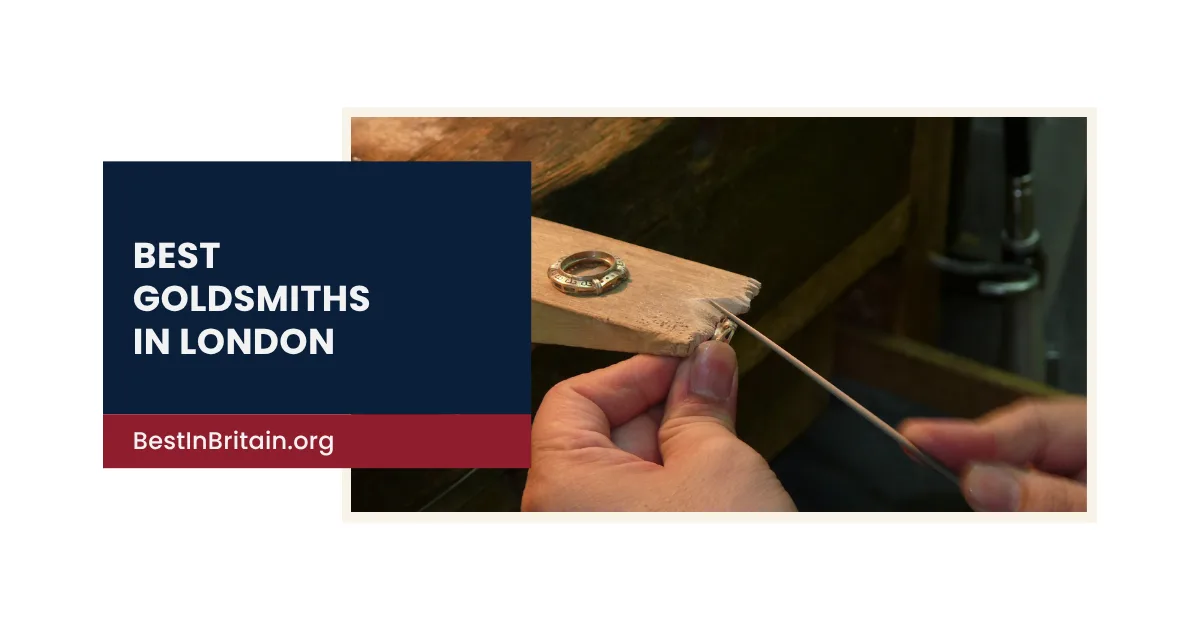
Commissioning fine jewellery is different from choosing a ready-made item from a display case. The design must work structurally as well as visually, the metal and gemstones must suit the intended wear, and the client needs to understand what can and cannot be changed once production begins.
London offers everything from small bench-led workshops to larger appointment-based bridal brands. Some create one-off pieces from a sketch, while others customise established ring settings. Some provide natural and lab-grown diamonds; others specialise in coloured stones, recycled jewellery or Fairtrade gold.
The six businesses below represent several distinct approaches to commissioning jewellery in London. They include small workshop-led specialists, larger Hatton Garden bridal jewellers, designer-led consultation services, a remodelling specialist and businesses offering configurable made-to-order rings.
The right choice depends on how original the design needs to be, the gemstone and metal required, the available budget and the amount of aftercare expected. A fully bespoke piece developed from an initial drawing is different from a standard setting customised with a chosen stone, even when both are marketed as personal commissions.
What distinguishes a strong bespoke jeweller?
A dependable jeweller should explain who designs and makes the piece, which elements are produced in-house and what changes remain possible after approval. The quotation should identify the metal fineness, stone specification, ring dimensions, hallmarking, deposit, production timetable, resizing terms and warranty exclusions.
For diamonds and significant coloured gemstones, buyers should receive an appropriate grading or laboratory report where the stone's identity, treatment or origin materially affects value. Ethical, recycled and traceability claims should also be tied to named suppliers, certification or documented sourcing rather than broad descriptions.
Reviews can illustrate individual experiences of design guidance and aftercare, but they cannot guarantee completion by a particular date, a perfect first fit or a right to return a customised piece.
How much does bespoke gold jewellery cost in London?
The spot price of 24-carat gold is not a useful way to estimate the cost of a finished bespoke ring.
Most jewellery is made from an alloy rather than pure 24-carat gold. The final cost can include:
- Design time
- CAD modelling or hand drawing
- Wax or resin model
- Gold, platinum or other metal
- Gemstones
- Diamond grading report
- Casting
- Hand fabrication
- Setting
- Polishing and finishing
- Hallmarking
- Engraving
- VAT
- Retail and workshop overhead
- Warranty and aftercare
Current published indicators include:
- Taylor & Hart bespoke design from £1,600
- Ready-made or customisable wedding bands commonly starting above £1,000 at larger bridal brands
- A bespoke natural-diamond engagement ring often costing several thousand pounds
- Lab-grown centre stones generally reducing the stone cost substantially, though the setting and craftsmanship may remain similar
- Hand-fabricated, complex, platinum or coloured-stone commissions potentially costing much more
Ask the jeweller to separate the stone, metal, design and manufacturing costs where possible. A lower quote may involve a lighter shank, lower-specification stone, simpler construction or more limited aftercare.
Hallmarking: what buyers should check
A hallmark independently confirms the precious-metal fineness of an item.
In the UK, jewellery described as gold generally requires a recognised hallmark when the precious-metal weight exceeds 1 gram. The exemption thresholds are:
- Gold: 1 gram
- Palladium: 1 gram
- Platinum: 0.5 grams
- Silver: 7.78 grams
A compulsory UK hallmark normally contains:
- Sponsor's or maker's mark
- Millesimal fineness mark
- Assay Office mark
A date letter and traditional fineness symbol may also be added but are optional.
A “750” mark indicates 18-carat gold, while “375” indicates 9-carat gold. A retailer's stamp alone is not necessarily a full legal hallmark.
Ask which Assay Office will test and mark the piece and where the hallmark will be placed, particularly if future resizing could affect it.
Retailers selling precious-metal items should make the statutory Dealer's Notice available at the physical or online point of sale. Buyers can use it to understand the compulsory hallmark components.
Hyde Park Design
Editorially SelectedBusiness details
Address
Suite 130A, 100 Hatton Garden, London EC1N 8NX
Phone: 020 7831 9566
Visits: By appointment
Hyde Park Design is a traditional bespoke-workshop option for clients seeking a one-off piece. The family business combines hand sketches, CAD modelling and London workshop production for engagement rings, wedding bands and one-off fine jewellery.
The studio is particularly suitable for clients who want a design created from the ground up rather than choosing only from standard setting templates. It works with diamonds, sapphires, rubies, emeralds and coloured diamonds, and can design shaped wedding bands around an existing engagement ring.
The business presents itself as a three-generation Hatton Garden family operation and publishes a lifetime manufacturer's warranty, complimentary first resizing within six months for standard adjustments and London production.
Those benefits remain subject to terms. A manufacturer's warranty normally covers faults in workmanship rather than accidental damage, wear, impact-related stone loss or unauthorised repair.
Pros
- Strong genuine-bespoke process
- Hand sketching and CAD modelling
- London workshop production
- Natural diamonds and coloured gemstones
- Published lifetime manufacturer's warranty
- Complimentary resizing advertised
Best for: Clients wanting a one-off engagement ring, unusual coloured gemstone or fitted wedding band.
What to confirm: Ask which work is completed in-house, what the warranty excludes and whether the resizing policy applies to the selected design.
Guidance without pressure
“The team helped refine an initial idea, explained the diamond options and created a fully customised ring without pressuring us to increase the budget.”
Michael K., Google review
Queensmith
Editorially SelectedBusiness details
Address
98 Hatton Garden, London EC1N 8NX
Phone: 020 7831 1901
Opening: Monday to Friday, 10am to 6.30pm; Saturday, 10am to 5pm
Queensmith is a polished Hatton Garden bridal jeweller with an in-house design and production model. It specialises in engagement rings, wedding bands and diamond jewellery, with consultations available in its London showroom.
Its main advantage is the combination of a broad collection with bespoke adaptation and clearly published aftercare. The business advertises a lifetime manufacturer's warranty, one complimentary resize within 60 days under the applicable terms, cleaning and polishing, and a 40-day returns period for eligible pieces.
Return rights do not automatically apply to every altered or bespoke commission. The jewellery must normally remain unworn and undamaged, and personalised work can be excluded. Clients should read the exact product terms before resizing or engraving.
Queensmith is a strong option for buyers who want a structured showroom process and the reassurance of a larger production and aftercare team rather than a small individual workshop.
Pros
- In-house Hatton Garden production
- Natural and lab-grown diamond options
- Lifetime manufacturer's warranty
- Published returns and resizing terms
- Broad bridal-jewellery range
- Strong aftercare proposition
Best for: Engagement and wedding-ring buyers wanting an established Hatton Garden showroom with clearly described aftercare.
What to confirm: Ask whether the selected piece is standard, customised or fully bespoke and how that affects cancellation and returns.
Taylor & Hart
Editorially SelectedCovent Garden showroom: 69–71 Monmouth Street, London WC2H 9DG
Phone: 020 3126 4915
Opening: By appointment, Monday to Sunday, 10am to 6pm
Published bespoke starting price: From £1,600
Taylor & Hart provides a highly structured design-consultation service for engagement and wedding rings. Clients can choose a collection setting, customise an existing design or commission a more individual piece with support from a named design consultant.
The company offers natural and lab-grown diamonds, with GIA and IGI grading used across relevant stones. Its 90-day return period generally applies to eligible engagement and wedding rings, while one complimentary resize is available within six months under the current policy.
Taylor & Hart states that blockchain-traced diamonds may be sourced in limited circumstances where available. This is not the default provenance route for every stone.
The company also takes a careful position on sustainability claims. Lab-grown diamonds have a different supply chain from mined diamonds but remain energy-intensive products; they should not automatically be described as environmentally harmless.
Pros
- Collaborative designer-led process
- Bespoke service with published starting price
- Natural and lab-grown diamonds
- 90-day returns for eligible rings
- One complimentary resize under current terms
- Central Covent Garden showroom
Best for: Buyers wanting an accessible guided design process with digital tools and central London appointments.
What to confirm: Ask whether the design is returnable, whether the diamond has a traceable source record and whether a large resize would require remaking the ring.
Attentive design process
“The ordering process was straightforward, and the design consultant remained knowledgeable and attentive from the first discussion through to the completed ring.”
Jorge McCallum, Google review
Harriet Kelsall Bespoke Jewellery
Editorially SelectedLondon studio: 69 Regent's Park Road, Primrose Hill, London NW1 8UY
Phone: 020 8154 9500
Email: primrosehill@hkjewellery.co.uk
Harriet Kelsall is the clearest design-led choice in this guide for clients interested in remodelling, repair, Fairtrade gold and a more narrative one-off commission.
The business has an in-house design and making process and offers engagement rings, wedding bands, anniversary jewellery, repairs and the redesign of inherited or unworn pieces. It can discuss recycled or Fairtrade metal and responsibly sourced gemstone options according to the commission.
Its London location in Primrose Hill provides an alternative to Hatton Garden and Covent Garden. Consultations focus on turning personal references, stories or existing jewellery into a new design.
Bespoke commissions require a non-refundable 50% deposit under the current terms because materials are purchased for the individual job. Bespoke pieces cannot normally be returned. Modified or resized ready-to-wear rings can also lose return eligibility.
The business advertises a lifetime warranty, but clients should request the full written wording and maintenance requirements.
Pros
- Genuine one-off design process
- In-house workshop capability
- Jewellery remodelling and repairs
- Fairtrade and recycled-metal discussions
- Coloured-stone and fitted-ring expertise
- Primrose Hill studio
Best for: Sentimental remodelling, unusual personal designs and buyers wanting to specify Fairtrade gold or coloured gemstones.
What to confirm: Agree which existing stones or metal can safely be reused and what happens if hidden damage is discovered during dismantling.
Flawless Fine Jewellery
Editorially SelectedBusiness details
Address
107 Hatton Garden, London EC1N 8LY
Phone: 07518 021455
Email: sales@flawlessfinejewelry.com
Opening: Monday to Saturday, 10am to 5.30pm; Sunday, 11am to 3.30pm
Flawless Fine Jewellery is a Hatton Garden showroom offering collection, made-to-order and bespoke engagement rings, wedding bands and diamond jewellery.
The business opened its London flagship in 2014 and describes the combined experience of its goldsmiths and gemmologists separately from the age of the company.
Flawless offers natural and lab-grown diamonds, with bespoke consultations and custom ring production. Current product pages commonly quote approximately four to eight weeks for custom or made-to-order work depending on the design and stone sourcing.
Aftercare and resizing should be confirmed for the exact piece before production begins, particularly where the design contains a full diamond band, engraving or complex setting.
Pros
- Hatton Garden showroom open seven days
- Natural and lab-grown diamond choices
- Bespoke and made-to-order rings
- Complimentary consultation
- Ready-to-buy and custom routes
Best for: Buyers comparing natural and lab-grown engagement rings in Hatton Garden and wanting both collection and bespoke options.
What to confirm: Ask for the diamond report, final production date, resizing allowance and written return status before engraving or alteration.
Bespoke ring and returning service
“The team guided us through the bespoke engagement ring and later helped with wedding-ring choices and sizing.”
Florentina Michnea, Google review
Austen & Blake London
Editorially SelectedBusiness details
Address
8 Greville Street, London EC1N 8SB
London enquiries: 020 7660 1529
Opening: Monday to Saturday, 10am to 6pm; Sunday hours should be confirmed before travelling
Austen & Blake provides made-to-order engagement and wedding rings through a direct retail and manufacturing model. Customers select a setting, metal, stone shape and natural or lab-grown diamond rather than beginning every order from a blank-page design brief.
This makes it useful for buyers who want a high level of configuration without the time or expense of a fully hand-developed bespoke commission. Standard made-to-order designs are currently described as taking around two to four weeks, although special occasions should be planned with additional time.
The return rules are important. The company publishes a 30-day return policy for eligible pieces, but engraved, bespoke, special-order and resized items are not eligible for return or exchange.
The current London showroom listing uses 020 7660 1529. Buyers should use the official booking page for appointments and collection arrangements.
Pros
- Broad made-to-order engagement-ring range
- Natural and lab-grown diamond options
- Central Greville Street showroom
- Typical two-to-four-week production guidance
- Useful online configuration process
Best for: Buyers wanting to configure a classic engagement-ring design with a clear online and showroom process.
What to confirm: Establish whether the order is classified as standard, special order or bespoke before paying.
Patient guidance through the options
“The consultant explained the setting and stone choices clearly and remained patient while we compared different designs.”
C Campbell, Google review
Quick comparison
| Jeweller | Main strength | Bespoke model | Published aftercare signal | Best fit |
|---|---|---|---|---|
| Hyde Park Design | Family workshop and one-off design | Sketch, CAD and workshop production | Lifetime manufacturer's warranty and resizing | Fully bespoke rings |
| Queensmith | In-house Hatton Garden bridal production | Collection plus bespoke | Lifetime warranty, resizing and 40-day eligible returns | Structured Hatton Garden buying |
| Taylor & Hart | Designer-led collaborative process | Custom and bespoke from £1,600 | 90-day eligible returns and one resize | Guided central London design |
| Harriet Kelsall | Narrative design and remodelling | Full bespoke and redesign | Lifetime warranty promoted | Heirloom reuse and ethical specifications |
| Flawless Fine Jewellery | Natural and lab-grown Hatton Garden range | Collection, made to order and bespoke | Confirm per order | Comparing diamond routes |
| Austen & Blake | Configurable direct model | Template-led made to order | 30-day eligible returns | Classic customisable rings |
Comparing bespoke jewellery quotations
Two quotations are comparable only when they describe the same stone, metal, dimensions and production method. A lower price may reflect a lighter band, lower stone specification, simpler setting or fewer included services.
Ask each jeweller to show:
- Natural, laboratory-grown or treated stone status
- Grading or laboratory report
- Carat weight and dimensions
- Cut, colour and clarity
- Metal and fineness
- Approximate finished metal weight
- Band width and depth
- Setting height
- Production method
- Hallmarking
- Engraving
- Design revisions included
- Deposit
- Final-payment point
- Delivery date
- Resize entitlement
- Warranty
- Cleaning and inspection
- Valuation and insurance documents
- VAT
A detailed written specification is especially important when comparing a fully bespoke workshop commission with a configurable collection design.
Who owns the design and stones?
The contract should explain ownership at each stage. A jeweller may retain copyright in sketches, CAD files and design work even when the customer owns the finished piece.
Ask:
- Whether CAD files will be supplied
- Whether the design can be reproduced for another customer
- When ownership of a purchased stone passes
- What happens if the commission is cancelled
- Whether unused inherited metal or stones are returned
- How scrap value is calculated
- Whether the jeweller can substitute a stone without written approval
For a separately purchased gemstone, confirm who bears the risk while it is in the workshop and whether the jeweller will insure it during setting.
Which goldsmith suits which commission?
For a fully original engagement ring
Hyde Park Design and Harriet Kelsall offer the clearest blank-page design processes. Taylor & Hart also provides bespoke work but within a more structured national brand.
For Hatton Garden comparison shopping
Hyde Park Design, Queensmith, Flawless and Austen & Blake are all based in or near the district. Book appointments rather than expecting every workshop to accept walk-ins.
For remodelling inherited jewellery
Harriet Kelsall has the strongest explicit remodelling and repair proposition. A jeweller may advise against reusing a fragile stone or old metal if doing so would compromise durability.
For lab-grown diamonds
Taylor & Hart, Queensmith, Flawless and Austen & Blake provide lab-grown options. Compare grading, cut quality, setting construction and aftercare rather than focusing only on carat size.
For coloured gemstones
Hyde Park Design and Harriet Kelsall provide strong custom-colour and gemstone design routes. Ask about hardness, treatments, origin reports and everyday-wear suitability.
For clearly published returns
Taylor & Hart, Queensmith and Austen & Blake publish defined return windows for eligible products. Personalisation, resizing or bespoke manufacture can remove that right.
In-house, outsourced and made-to-order production
“In-house” can mean different things. A jeweller may design, assemble and finish a piece in its own workshop while using specialist external casters, setters, engravers or Assay Offices.
Outsourcing is not automatically a disadvantage. Specialist production can be appropriate, but the customer should understand who is responsible for quality control and warranty work.
Ask:
- Where the piece is designed
- Where casting or fabrication takes place
- Who sets the stones
- Whether CAD and casting are outsourced
- Which Assay Office is used
- Who performs repairs
- Whether the same workshop handles future resizing
A made-to-order ring selected from an existing setting can still be well made, but it should not be presented as equivalent to a blank-page commission.
Natural versus lab-grown diamonds
Natural and lab-grown diamonds have the same crystal structure, but they differ in origin, supply, price and resale market.
A grading report should clearly identify the stone as natural or laboratory-grown. The report describes the stone but is not a valuation and does not guarantee resale value.
When comparing, ask about:
- Laboratory report
- Cut grade
- Colour and clarity
- Fluorescence
- Treatment
- Growth method
- Post-growth treatment
- Laser inscription
- Replacement value
- Upgrade or trade-in policy
Lab-grown diamonds usually cost less than comparable natural stones, allowing a larger stone within the same budget. Their second-hand value can be uncertain and may fall as production becomes more efficient.
Natural diamonds are finite geological materials but also carry environmental and social considerations. Neither category should be described with simplistic universal claims such as “completely ethical” or “fully sustainable”.
Coloured gemstones
Sapphires, rubies and emeralds vary significantly in colour, treatment, origin and durability.
Ask whether the stone has been:
- Heated
- Oiled
- Filled
- Diffusion treated
- Irradiated
- Laboratory created
Emeralds often contain natural inclusions and may be treated with oil. They require more careful handling than diamonds or sapphires.
A major coloured stone should come with an appropriate independent laboratory report where origin or treatment materially affects value.
Hardness alone does not determine everyday durability. Cleavage, inclusions, setting style and exposure to heat, steam or ultrasonic cleaning also matter.
The bespoke process
A typical commission involves:
- Initial consultation
- Budget and timescale
- Stone and metal selection
- Sketch or CAD
- Quotation
- Deposit
- Design approval
- Casting or fabrication
- Setting and finishing
- Hallmarking
- Collection and final payment
Do not approve a CAD image without understanding that a screen render can make claws, shanks and settings appear smoother or more delicate than the physical piece.
Ask for dimensions in millimetres, including band width, depth, setting height and stone measurements.
For complex work, a resin or wax model can make scale easier to judge than a screen image. Confirm whether a physical model is included and whether changes after approval carry an additional fee.
Remodelling inherited jewellery
Inherited jewellery can carry emotional value that is not reflected in the material price. Before dismantling, ask the jeweller to photograph, inspect and record each stone and hallmark.
Old metal may contain solder, porosity or mixed alloys that make direct reuse unsuitable. The jeweller may recommend refining it and using new metal instead. Similarly, an old gemstone may need repolishing or may be too damaged for a new exposed setting.
The remodelling agreement should state:
- Which stones will be reused
- Whether metal is reused, credited or returned
- What happens if hidden damage is found
- Replacement-stone approval
- Scrap valuation
- Insurance while held
- Return of unused material
- New hallmarking
- Effect on antique or historical value
Do not allow a sentimental piece to be dismantled until the design, risks and ownership of every component are clear.
Deposits and cancellation
Bespoke deposits are often non-refundable because the jeweller buys stones and materials or begins design work specifically for the client.
The contract should state:
- Deposit amount
- Cancellation point
- Ownership of drawings and CAD files
- Ownership of purchased stones
- Changes included
- Cost of redesigns
- Delivery target
- Delay process
- Final-payment timing
- Return eligibility
Consumer cancellation rights for online orders can be restricted for goods made to personal specifications. This does not remove statutory rights where goods are faulty, not as described or otherwise fail to meet legal requirements.
Ring sizing
Finger size can change with temperature, time of day, pregnancy, medication and weight.
Wide bands often need a different fit from narrow rings. Full-eternity rings and complex designs can be difficult or impossible to resize.
For a surprise proposal, ask:
- Whether the design can be resized
- Maximum size change
- Complimentary period
- Remake charge
- Engraving replacement cost
- Turnaround time
- Whether resizing affects the warranty or returns
Avoid commissioning a full-eternity design in an uncertain size. Tension settings, patterned bands, engraved shoulders and rings with stones around the entire circumference can also be difficult or costly to alter.
Warranties and maintenance
A lifetime manufacturer's warranty does not normally mean that all future repairs are free.
Common exclusions include:
- Accidental damage
- Scratches
- Normal wear
- Bent claws
- Stone loss after impact
- Chemical damage
- Unauthorised repair
- Failure to attend inspections
- Loss or theft
Fine jewellery should be inspected periodically, especially pieces worn every day. Cleaning, polishing and rhodium plating may be separate services.
Keep the receipt, valuation, grading report and warranty terms.
Where a warranty requires periodic inspection, ask how often this must occur, whether the inspection is free and whether missing an appointment affects cover.
Collection and delivery checks
Inspect the finished piece before accepting collection where possible. Confirm that the design, stones, engraving, dimensions and hallmark match the approved specification.
For insured delivery, ask:
- Which courier is used
- Whether a signature is required
- When risk passes
- Whether the parcel is insured for full value
- How delays or loss are handled
- Whether packaging identifies the sender as a jeweller
- How returns must be insured
Report discrepancies immediately and avoid wearing or altering the item while a concern is being assessed.
Valuations and insurance
The purchase invoice is not always the same as an insurance valuation.
Ask whether the jeweller provides:
- Purchase valuation
- Replacement valuation
- Detailed stone description
- Diamond or gemstone report
- Photographs
- Hallmark details
- Serial or inscription information
Insurance can be arranged through home contents cover or specialist jewellery insurance. Check single-item limits, travel, accidental loss, theft away from home and replacement conditions.
Update valuations periodically where metal and gemstone markets have changed significantly.
Buying safely in Hatton Garden
Hatton Garden contains retailers, manufacturers, wholesalers and appointment-only studios. Price differences do not necessarily mean identical products.
Compare like for like:
- Stone report and measurements
- Natural or lab-grown origin
- Metal weight and fineness
- Band dimensions
- Setting method
- Hallmark
- Production location
- Warranty
- Resize policy
- Returns
- Delivery date
Do not feel pressured to pay a deposit during the first appointment. Request the specification and quotation in writing.
Check the legal business name on the invoice, payment recipient and warranty. Fraudsters can imitate jewellery brands or redirect payment instructions, so verify any changed bank details using a trusted telephone number.
If a problem appears after collection
Contact the jeweller promptly if a stone becomes loose, the ring distorts, an engraving is wrong or the item differs from the approved specification.
Keep photographs and avoid further wear where doing so could worsen the damage. The jeweller should have a reasonable opportunity to inspect before another workshop alters the piece, unless urgent action is needed to prevent loss.
Ask whether the issue is being handled under:
- Statutory consumer rights
- Manufacturer's warranty
- Complimentary aftercare
- Paid repair
- Insurance
Unauthorised work by another jeweller can affect a manufacturer's warranty, so obtain the position in writing before proceeding.
Common mistakes to avoid
Comparing only carat weight
Cut, dimensions, colour, clarity and setting matter.
Assuming every “bespoke” ring is unique
Some services customise a standard template rather than creating a new design.
Engraving before confirming fit
Engraving can remove return eligibility and increase resize cost.
Ignoring setting height
A high setting can catch on clothing and may not suit every lifestyle.
Treating a warranty as insurance
Warranty does not cover loss, theft or every accident.
Buying without checking the hallmark
Verify precious-metal purity and the sponsor and Assay Office marks.
Reusing old stones without inspection
Chips, wear or previous repairs can affect whether a stone is safe to reset.
Frequently asked questions
How long does a bespoke ring take?
Commonly four to eight weeks, but unusual stones, hand fabrication and design revisions can take longer.
Is 18-carat gold better than 9-carat gold?
It contains more gold, but suitability also depends on colour, hardness, design, budget and intended wear.
Is platinum stronger than gold?
Platinum is dense and durable, but it can scratch and develop a patina. It is not maintenance-free.
Can a lab-grown diamond be identified by eye?
Usually not reliably. Laboratory equipment and a grading report identify origin.
Are bespoke rings returnable?
Often not. Check the contract before paying the deposit.
Should an engagement ring be insured immediately?
High-value jewellery should be insured as soon as responsibility passes to the buyer.
Choosing with confidence
The most suitable London goldsmith is the one whose design process, workshop capability and terms match the commission.
Hyde Park Design offers a traditional bespoke workshop, Queensmith provides structured Hatton Garden production and aftercare, Taylor & Hart uses a guided designer-led process, Harriet Kelsall specialises in remodelling and individually specified commissions, Flawless offers natural and lab-grown choices, and Austen & Blake provides configurable made-to-order rings.
Before committing, compare the exact stone, metal weight, dimensions, hallmark, deposit and aftercare. The most useful quotation is not necessarily the cheapest; it is the one that makes clear exactly what will be made and what support follows the sale.
Related articles
Related guides
Tailors
Best custom-made tailors in London
A researched guide to London tailors for true bespoke suits, made-to-measure tailoring, wedding outfits, custom garments and complex alterations.
Updated 27 July 2026

Marketing Agencies
Top digital marketing agencies in London
A curated guide to the premier digital marketing agencies in London, highlighting leaders in SEO, paid advertising, and strategic campaign execution.
Updated 23 July 2026

Private Clinics
Best Home Care Services in London
A researched guide to six London home-care providers, covering visiting care, live-in care, nursing, dementia support, current costs, CQC ratings, funding and choosing a safe service.
Updated 22 July 2026

Solicitors
Best Immigration Lawyers in London
A researched guide to six London immigration law firms, covering personal and business immigration, sponsor licences, appeals, asylum, legal aid, current fees and choosing regulated advice.
Updated 22 July 2026

Culture and Attractions
Best Jazz Clubs in London for Live Music
A current guide to six London jazz clubs and live-music venues, covering ticket prices, seating, food, age rules, accessibility, jam sessions and the different styles each venue presents.
Updated 22 July 2026

Commercial Property Agents
Top office rentals in London
A practical guide to London serviced offices and coworking spaces, comparing desk prices, contract terms, team sizes, meeting rooms, amenities and access.
Updated 22 July 2026
Know a business we should consider?
Send us the details and our editorial team will review whether it fits a future guide.
Submit businessWriter profile
George Davies
Regional and city guide writer
George covers location led guides, city roundups, regional comparisons, attractions, markets, museums and practical local recommendations.