
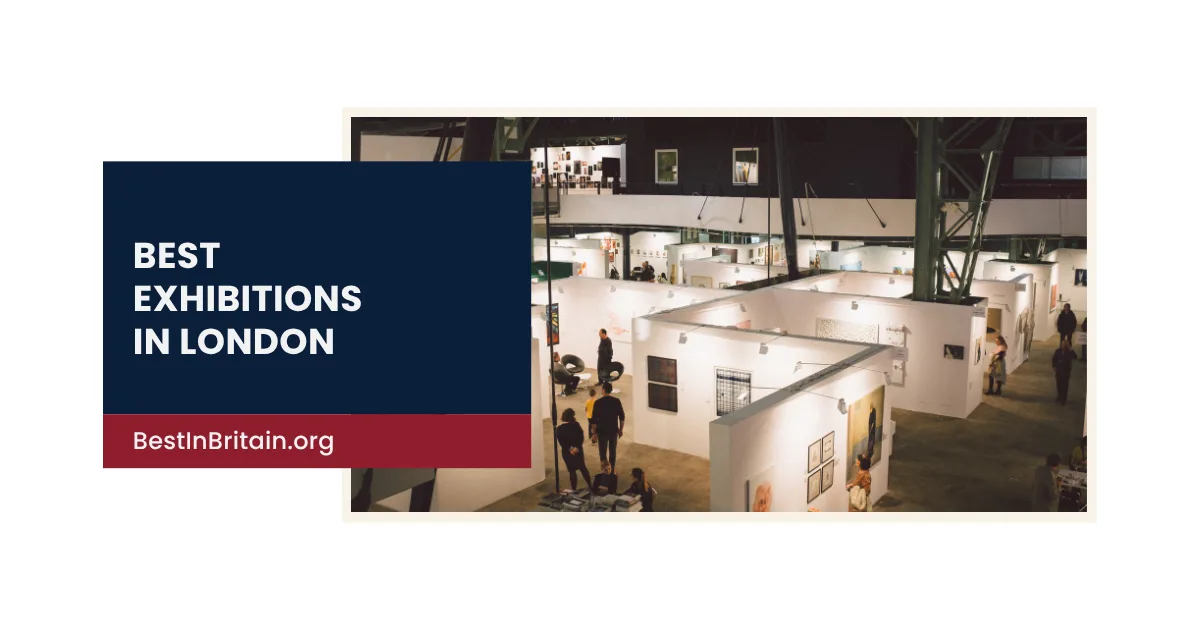
London's exhibition calendar changes rapidly, particularly in summer when several major shows close within a few weeks of one another. The selection below is accurate for 17 July 2026 and focuses on exhibitions that are open now, together with Frida Kahlo at Tate Modern, which opens on 21 July.
The programme ranges from major paid retrospectives at Tate Modern, the V&A, Tate Britain and the Hayward Gallery to free displays at the British Museum, National Gallery, Design Museum and Barbican. It covers painting, fashion, film design, music, animation, Pan-African visual culture, immersive installation and family-focused work.
Dates, ticket prices and opening arrangements can change. Check the official exhibition page before travelling, especially for timed entry, late openings, access sessions and final-week availability.
How to choose what to see
The most rewarding exhibition is not necessarily the largest or most expensive. A focused free display can offer a more satisfying hour than a crowded blockbuster when it closely matches the visitor's interests.
Prioritise by closing date, subject and energy level. Major surveys with extensive film, archive or sound material usually need at least 90 minutes, while smaller free displays can be combined comfortably with a permanent collection. Families should also check content guidance, age suitability and the availability of seating before booking.
Quick guide: what to prioritise
Closing soon
- Sufi Life and Art at the British Museum closes on 26 July 2026.
- Wes Anderson: The Archives at the Design Museum closes on 16 August 2026.
- Hurvin Anderson at Tate Britain closes on 23 August 2026.
- Zurbarán at the National Gallery closes on 23 August 2026.
- Tracey Emin: A Second Life at Tate Modern closes on 31 August 2026.
Best free exhibitions
- Hurvin Anderson at Tate Britain
- Sufi Life and Art at the British Museum
- Early Netherlandish Drawings at the British Museum
- Waldmüller: Landscapes at the National Gallery
- Take One Picture 2026 at the National Gallery
- Future Observatory: Tools for Transition at the Design Museum
- Delcy Morelos: origo at the Barbican
Best for families
- Inside Aardman: Wallace & Gromit and Friends at Young V&A
- Take One Picture 2026 at the National Gallery
- Wes Anderson: The Archives for older children and film fans
Frida: The Making of an Icon
Editorially SelectedVenue: Tate Modern, Bankside, London SE1 9TG
Dates: 21 July to 15 December 2026
Price: Ticketed; free for Tate Members
Frida Kahlo has become one of the most recognisable artists of the twentieth century, but familiarity with her face does not always mean familiarity with her work. Opening on 21 July, Tate Modern's exhibition examines both the paintings and the process through which Kahlo became a global cultural symbol.
The most interesting aspect is the distinction between the artist and the icon constructed around her. Paintings, photographs, personal material and later representations show how Kahlo's image travelled through fashion, politics, popular culture and identity movements.
Visitors expecting only a conventional chronological retrospective may be surprised by the exhibition's wider emphasis. It is as much about reception and mythology as it is about biography.
The exhibition runs until 15 December 2026, but opening-week and weekend slots can sell well ahead. Book a timed ticket rather than relying on same-day availability.
Best for: Visitors interested in art, identity, self-fashioning and twentieth-century visual culture.
Planning tip: Allow at least 90 minutes and avoid pairing it with another major Tate exhibition unless you are comfortable with a long gallery day.
Tracey Emin: A Second Life
Editorially SelectedVenue: Tate Modern, Bankside, London SE1 9TG
Dates: Until 31 August 2026
Price: Ticketed; free for Tate Members
This landmark survey spans roughly four decades of Tracey Emin's practice, bringing together paintings, installations, textiles, drawings, film and works associated with the confessional intensity that made her one of Britain's most discussed contemporary artists.
The exhibition is valuable because it places the famous early work within a much longer career. Visitors who know only pieces such as My Bed can see how recurring subjects—desire, illness, shame, memory, survival and the body—have developed through quieter drawings and more recent paintings.
Some galleries contain sexually explicit material and emotionally difficult themes. It is not the most straightforward family choice, although older teenagers studying contemporary art may find it significant.
With a closing date at the end of August, this is one of the summer exhibitions to prioritise.
Best for: Contemporary-art visitors and anyone wanting a fuller view of Emin beyond the best-known tabloid-era works.
Planning tip: Tate Modern stays open later on Fridays and Saturdays, which can make an evening visit more comfortable than a crowded weekend afternoon.
Anish Kapoor
Editorially SelectedVenue: Hayward Gallery, Southbank Centre, Belvedere Road, London SE1 8XX
Dates: 16 June to 18 October 2026
Price: £22 standard entry; members free
Anish Kapoor's return to the Hayward Gallery fills the entire building with mirrored surfaces, voids, light-absorbing forms, visceral paintings and monumental installations.
The exhibition is designed around perception. Polished steel bends the surrounding space, dark openings appear deeper than their physical dimensions and suspended forms make the brutalist galleries feel unstable. Several works encourage visitors to move around them slowly because the visual effect changes dramatically with position.
The Hayward provides a particularly effective setting for Kapoor. Its concrete rooms and outdoor terraces allow the work to feel architectural rather than decorative.
The venue warns that some recent pieces evoke blood and bodily material. There can also be vertigo, disorientation and highly reflective surfaces. Relaxed hours and access events are available on selected dates.
Best for: Visitors who enjoy large-scale installation, optical effects and physically immersive art.
Planning tip: Free exhibition tours are scheduled on selected Wednesdays and Fridays for ticket holders.
Schiaparelli: Fashion Becomes Art
Editorially SelectedVenue: V&A South Kensington, Cromwell Road, London SW7 2RL
Dates: Until 8 November 2026
Price: £28 weekdays and £30 weekends; members free
This is the first major UK exhibition dedicated to Elsa Schiaparelli and the continuing fashion house that bears her name.
The exhibition traces the founder's work from the 1920s onwards, including her collaborations with artists and her use of Surrealist humour, unusual materials, anatomical motifs and deliberately disruptive silhouettes. It then follows the house into its contemporary period under Daniel Roseberry.
This is not simply a parade of gowns. Accessories, drawings, jewellery, archive material and theatrical presentation help explain why Schiaparelli blurred the line between fashion object, visual joke and artwork.
The high ticket price makes it one of the more expensive exhibitions in the guide, but the scale and specialist loans will appeal strongly to fashion and design visitors.
Best for: Fashion students, costume enthusiasts and visitors interested in Surrealism's influence on design.
Planning tip: Friday opening at the V&A runs later than most weekdays, making it easier to combine the exhibition with the permanent fashion and jewellery galleries.
Project a Black Planet: The Art and Culture of Panafrica
Editorially SelectedVenue: Barbican Art Gallery, Silk Street, London EC2Y 8DS
Dates: Until 6 September 2026
Price: Ticketed, with pay-what-you-can periods on selected Thursdays and Fridays
Bringing together more than 250 works, this major Barbican exhibition explores the influence of Pan-Africanism on art and cultural production from the 1920s to the present.
The range is broad: painting, installation, posters, film, magazines, political graphics and archival material sit alongside one another. Rather than treating Pan-Africanism as one fixed movement, the exhibition follows how ideas of solidarity, liberation, nationhood and diaspora changed across countries and generations.
The surrounding programme includes film, performance, music, talks and community events, making the exhibition part of a larger season rather than an isolated gallery show.
Selected pay-what-you-can periods improve access, but these can be popular. Book in advance where the system allows.
Best for: Visitors interested in modern art, political history, publishing, diaspora and global cultural movements.
Planning tip: Allow extra time for film and archival material; this is difficult to absorb in a rushed 45-minute visit.
Early Netherlandish Drawings
Editorially SelectedVenue: British Museum, Great Russell Street, London WC1B 3DG
Dates: Until 20 September 2026
Price: Free
Bringing together around 120 works, this British Museum exhibition examines drawing in the Low Countries during the fifteenth and sixteenth centuries.
The material ranges from finished presentation drawings to studies used in workshops and preparation for paintings, prints and decorative projects. Its intimacy is part of the appeal: close looking reveals changes of mind, handling of chalk and ink, and the practical role drawing played in developing an image.
The exhibition is especially valuable because works on paper are light-sensitive and cannot remain on permanent display. It offers access to material that is rarely seen together and provides a quieter alternative to London's larger summer blockbusters.
Best for: Drawing enthusiasts, art students and visitors interested in Northern Renaissance workshop practice.
Planning tip: The exhibition is free but benefits from an unhurried visit; allow around an hour before continuing into the museum's permanent galleries.
Take One Picture 2026
Editorially SelectedVenue: National Gallery, Trafalgar Square, London WC2N 5DN
Dates: Until 31 August 2026
Price: Free
Take One Picture presents work created by primary-school pupils across the UK in response to Canaletto's A Regatta on the Grand Canal.
The exhibition demonstrates how one painting can become a starting point for history, making, storytelling, performance and collaborative learning. The children's work is displayed as a serious creative response rather than a decorative education project, making the show worthwhile for adults interested in museum learning as well as families.
Its scale is manageable, and the free entry makes it easy to combine with the National Gallery's permanent collection or Waldmüller without turning the day into an expensive programme.
Best for: Families, teachers and visitors interested in creative learning.
Planning tip: Pair it with the original Canaletto painting in the permanent collection to see how the schools interpreted its details, movement and setting.
Wes Anderson: The Archives
Editorially SelectedVenue: Design Museum, 224–238 Kensington High Street, London W8 6AG
Dates: Until 16 August 2026
Price: Ticketed; members free
This retrospective draws on Wes Anderson's extensive production archive, presenting props, costumes, models, notebooks, storyboards and design material from across his films.
The appeal goes beyond recognisable objects. Seeing the working materials together reveals how colour, typography, costume, architecture and miniature construction are coordinated to create the director's highly controlled visual worlds.
Film fans will recognise material from several major productions, but the exhibition is equally useful for anyone interested in production design, model-making and creative collaboration.
Because the show closes in mid-August, it should be treated as a priority rather than a later-summer option.
Best for: Film lovers, production designers, illustrators and families with older children.
Planning tip: Weekday morning visits are likely to provide more space around the smaller archive objects and models.
Ana Mendieta
Editorially SelectedVenue: Tate Modern, Bankside, London SE1 9TG
Dates: Until 17 January 2027
Price: £18 standard entry; members free
Tate Modern's Ana Mendieta exhibition brings together work by an artist whose performance, film, photography and earth-body interventions had a lasting influence on contemporary art.
Mendieta frequently used her own body or its outline in landscapes, working with soil, fire, water, vegetation and blood-like materials. Much of the original action survives through photographs and moving-image documentation rather than a conventional permanent object.
The exhibition is likely to reward visitors who read the context rather than moving quickly between images. Questions of displacement, gender, ritual, violence and belonging are central.
Some work may be disturbing, and it is not designed as a light family exhibition.
Best for: Visitors interested in performance, feminist art, land art, photography and the body.
Planning tip: The exhibition contains challenging material and extensive moving-image documentation, so allow time to read the context rather than treating it as a rapid gallery visit.
Zurbarán
Editorially SelectedVenue: National Gallery, Trafalgar Square, London WC2N 5DN
Dates: Until 23 August 2026
Price: Ticketed
Francisco de Zurbarán is one of the defining painters of seventeenth-century Seville, known for monumental religious figures, still-life precision and intense contrasts of darkness and light.
The National Gallery exhibition brings together works from European and American collections, covering early commissions as well as paintings made for private devotion. The drama comes less from movement than from stillness: figures often appear isolated against dark backgrounds, with fabric, ceramics and faces rendered in concentrated detail.
This is a strong choice for visitors who want an old-master exhibition that can be seen thoroughly without the sprawling scale of a blockbuster retrospective.
It closes in August, so advance booking is sensible.
Best for: Old-master enthusiasts and visitors interested in Spanish Baroque painting.
Planning tip: Exhibition tickets include general admission, so leave time for the National Gallery's permanent Spanish collection.
James McNeill Whistler
Editorially SelectedVenue: Tate Britain, Millbank, London SW1P 4RG
Dates: Until 27 September 2026
Price: Ticketed; members free
Tate Britain's Whistler exhibition is the first major European survey of the artist in roughly three decades.
Whistler's portraits, nocturnes, drawings, prints and decorative work show an artist interested in atmosphere and arrangement rather than straightforward storytelling. His paintings of the Thames are particularly relevant in London, transforming industrial fog, bridges and night-time river views into tonal compositions.
The exhibition also explores his role as a designer and self-promoter. Whistler carefully shaped interiors, frames and public identity, making the show valuable beyond painting alone.
Best for: Visitors interested in nineteenth-century painting, printmaking, design and London river imagery.
Planning tip: Tate Britain is quieter than Tate Modern on many weekdays and can provide a less pressured major-exhibition visit.
Hurvin Anderson
Editorially SelectedVenue: Tate Britain, Millbank, London SW1P 4RG
Dates: Until 23 August 2026
Price: Free
Hurvin Anderson's major solo exhibition brings together more than 80 paintings spanning over four decades.
His work moves between Britain and the Caribbean, memory and observation, figuration and abstraction. Barbershops, landscapes, swimming pools, interiors and glimpsed spaces are transformed through colour and unstable perspective.
The fact that the exhibition is free makes it one of the strongest-value museum visits in London this summer. It is substantial enough to justify a dedicated trip but can also be combined with Whistler or the permanent Tate Britain collection.
Best for: Painting enthusiasts and visitors interested in migration, memory, place and contemporary British art.
Planning tip: It closes on 23 August, so do not postpone it until the autumn.
The Music Is Black: A British Story
Editorially SelectedVenue: V&A East Museum, Stratford Waterfront, London E20
Dates: 21 July to 15 December 2026
Price: £22.50 weekdays and £24.50 weekends
This major V&A East exhibition examines Black British music as a creative, social and political force.
Rather than isolating one genre, it connects sound systems, performance, community spaces, fashion, broadcasting and visual culture. The story reaches across generations and places Black British music within the wider history of post-war Britain.
Its location in the newly opened V&A East Museum is part of the appeal. Visitors can experience the exhibition alongside a venue built around different approaches to collecting and display from the South Kensington museum.
Best for: Music fans and visitors interested in British social history, youth culture, migration and design.
Planning tip: Allow time to explore the wider V&A East Museum rather than treating this as a standalone timed exhibition.
Inside Aardman: Wallace & Gromit and Friends
Editorially SelectedVenue: Young V&A, Cambridge Heath Road, London E2 9PA
Dates: Until 15 November 2026
Price: £12.50
This family exhibition explores the handmade craft behind Aardman productions, including Wallace & Gromit and other familiar characters.
Models, sets, sketches and production material demonstrate how stop-motion animation is planned and built. The strongest aspect is the opportunity for children to understand that apparently seamless screen worlds are created through patient physical work, tiny adjustments and collaboration across many disciplines.
Adults interested in animation and model-making should also find plenty to examine, although the exhibition is designed with family participation in mind.
Best for: Families, animation fans and children interested in making and storytelling.
Planning tip: Young V&A is popular during school holidays. Book the exhibition slot and general museum visit together where possible.
Sufi Life and Art
Editorially SelectedVenue: British Museum, Great Russell Street, London WC1B 3DG
Dates: Until 26 July 2026
Price: Free
This focused British Museum exhibition explores Sufi belief and practice through art, objects, poetry, music and devotional culture.
The show includes material from different regions and periods, emphasising that Sufism cannot be reduced to one visual style or ritual. Calligraphy, manuscripts, ceramics and other objects connect spiritual ideas with daily and artistic life.
Because it is free and relatively compact, it is an excellent addition to a broader British Museum visit. It also offers more depth than simply passing through a permanent gallery without a clear theme.
The closing date is very near, making this the most urgent recommendation in the guide.
Best for: Visitors interested in Islamic art, poetry, spirituality and cultural history.
Planning tip: Fridays offer later British Museum opening, although gallery availability can vary.
Barbican installations: Delcy Morelos and Liam Young
Editorially SelectedVenue: Barbican Centre, Silk Street, London EC2Y 8DS
Dates: Summer 2026
Price: Includes free installations and ticketed exhibitions
The Barbican's summer programme extends beyond its main gallery exhibition with two substantial installation-led experiences.
Delcy Morelos: origo
Open until 31 July 2026, this free site-specific installation in the Sculpture Court uses soil, clay and fragrant spices to explore the relationship between human life and the earth. The sensory component is significant, and opening may be adjusted during extreme weather.
Liam Young: In Other Worlds
Running until 6 September 2026 in The Curve and other Barbican spaces, this immersive exhibition uses film, models, costumes, sound and speculative design to imagine alternative futures.
These works suit visitors who prefer installations and spatial experiences to conventional framed exhibitions. They can also be combined with Project a Black Planet for a full Barbican art day.
Best for: Immersive-installation visitors, architecture fans and anyone seeking free visual art in the City.
Planning tip: Check individual opening hours. The Curve, Sculpture Court and main Art Gallery do not always follow identical schedules.
Waldmüller: Landscapes
Editorially SelectedVenue: National Gallery, Trafalgar Square, London WC2N 5DN
Dates: Until 20 September 2026
Price: Free
This is the first UK exhibition devoted to the landscape paintings of Ferdinand Georg Waldmüller.
The Austrian artist's work combines close natural observation with carefully constructed light and detail. Alpine views, woodland and rural scenes can appear immediate, but the exhibition also shows how deliberate his compositions were.
Its focused scale makes it suitable for visitors who want a free exhibition that can be seen attentively in under an hour. It pairs particularly well with the National Gallery's permanent nineteenth-century rooms.
Best for: Landscape-painting enthusiasts and visitors seeking a calm, free exhibition near Trafalgar Square.
Planning tip: Combine it with Zurbarán only if you have enough energy for two very different periods and visual languages.
Future Observatory: Tools for Transition
Editorially SelectedVenue: Design Museum, 224–238 Kensington High Street, London W8 6AG
Dates: Until January 2027
Price: Free
This free display considers how design research can respond to environmental and social transition.
Rather than presenting polished consumer products alone, it focuses on tools, methods, experiments and systems. The display is useful for understanding design as a process of testing and adaptation rather than simply styling finished objects.
It is smaller than the Design Museum's headline exhibitions, but it adds substance to a visit and provides a useful counterpoint to the fashion and film-focused paid shows.
Best for: Designers, students and visitors interested in sustainability and research-led practice.
Planning tip: See it before or after Wes Anderson rather than travelling to Kensington solely for this compact display.
Choosing between free and ticketed exhibitions
Paid exhibitions are most worthwhile when the loans, installation or archive material cannot be experienced through the permanent collection. Schiaparelli, Wes Anderson, Tracey Emin and Anish Kapoor each offer a concentrated body of work that justifies a dedicated visit for the right audience.
Free displays are not secondary recommendations. Hurvin Anderson is a major museum survey, while Early Netherlandish Drawings, Sufi Life and Art and Waldmüller provide focused access to material that is rarely shown together.
A balanced exhibition day often works best with one demanding ticketed show and one smaller free display. This leaves time for travel, reading, refreshments and the permanent collection without reducing the visit to a sequence of timed entrances.
Planning an exhibition day in London
South Bank and Bankside
Tate Modern and the Hayward Gallery are within a pleasant riverside walk of one another, but seeing two major paid exhibitions in one day can be tiring. Choose one as the main event and use free permanent displays or riverside installations for the rest of the day.
South Kensington and Kensington
The V&A and Design Museum are not next door, but they can be combined using the Underground or a longer walk. Schiaparelli and Wes Anderson make a strong fashion-and-visual-culture pairing, though the combined ticket cost is substantial.
Millbank and Trafalgar Square
Tate Britain and the National Gallery can be connected by bus or river. Hurvin Anderson and Waldmüller provide an entirely free painting day, while Whistler and Zurbarán make a more ambitious ticketed programme.
City and Barbican
Project a Black Planet, Delcy Morelos and In Other Worlds can be combined at the Barbican. Check timed-entry and closing times because the installations occupy different spaces.
East London
Young V&A and V&A East serve different audiences and are not within immediate walking distance. Families may prefer Young V&A, while music and social-history visitors should prioritise V&A East.
Ticket and membership advice
A museum membership can make sense when you plan to see several paid exhibitions at one institution, but compare the annual price with the exhibitions you will realistically attend.
Before buying:
- Check whether the desired date is available
- Review guest privileges
- Confirm whether members still need a timed reservation
- Look at concessions
- Check refund and exchange terms
- Avoid unofficial resale tickets
- Confirm whether general museum admission is included
Dynamic or date-dependent pricing is increasingly common. A weekday ticket may cost less than a weekend slot.
Accessibility and sensory considerations
Major London museums publish access information, but conditions differ by exhibition. Installations may include:
- Low light
- Loud or directional sound
- Reflective surfaces
- Strong scents
- Flashing or moving imagery
- Narrow circulation
- Disturbing content
- Long periods without seating
Check for relaxed hours, BSL tours, audio-described tours, large-print guides and step-free routes. Ask whether seating is available inside the exhibition rather than only in the museum foyer.
Content guidance also matters. Tracey Emin and Ana Mendieta include difficult material, while Anish Kapoor can create disorientation through reflective surfaces, voids and changes in spatial perception.
Frequently asked questions
Which exhibitions are free?
Hurvin Anderson, Sufi Life and Art, Early Netherlandish Drawings, Waldmüller: Landscapes, Take One Picture, Future Observatory and Delcy Morelos: origo are free.
Which exhibition is best for families?
Inside Aardman at Young V&A is the clearest family choice. Wes Anderson can work well for older children with an interest in film and design.
Which exhibitions are closing first?
Sufi Life and Art closes on 26 July, Wes Anderson on 16 August, and Hurvin Anderson and Zurbarán on 23 August 2026.
Do London museums require advance booking?
Permanent collections are often free, but major exhibitions usually use timed tickets. Advance booking is advisable for weekends and final weeks.
Can two major exhibitions be seen in one day?
Yes, but it often reduces enjoyment. Allow at least 60 to 90 minutes for each major show plus travel, queues and breaks.
Are museum memberships worth it?
They can be when visiting several paid exhibitions at the same institution or when you value repeat entry and priority booking. They are less useful for a one-off tourist visit.
Final thoughts
London's summer exhibition programme is unusually varied. Tracey Emin, Ana Mendieta and Anish Kapoor provide major contemporary-art experiences, while Schiaparelli and Wes Anderson explore the construction of visual identity through fashion, objects and film. Frida Kahlo joins the programme on 21 July.
For free entry, Hurvin Anderson, Sufi Life and Art, Early Netherlandish Drawings, Waldmüller, Take One Picture and the Barbican installations offer substantial alternatives to paid blockbusters. Visitors with limited time should prioritise the exhibitions closing in July and August, leaving the longer-running autumn and winter shows for a later trip.
Related articles
Related guides

Things to Do
Best Ice Skating Rinks in London
A current guide to London's best year-round ice skating rinks, covering public sessions, prices, skate hire, lessons, family rules, accessibility and seasonal rink updates.
Updated 13 July 2026

Things to Do
15 of the best walking tours in London for curious wanderers
Discover 15 standout London walking tours, covering royal ceremony, wartime Westminster, women’s history, Harry Potter, Sherlock Holmes, street art, food, pubs and architecture.
Updated 12 July 2026
Things to Do
12 of the best tours in London for memorable city experiences
Discover 12 standout London tours, including Harry Potter, sightseeing buses, Thames cruises, food walks, cycling, theatre history and specialist neighbourhood experiences.
Updated 11 July 2026
Things to Do
30 of the best free things to do in London for locals and visitors
Discover 30 of the best free things to do in London, from major museums and royal parks to historic ceremonies, skyline views, live music and unusual attractions.
Updated 5 July 2026

Things to Do
Top VR Experiences in London
A practical guide to London virtual reality venues, comparing free-roaming arenas, escape games, group sizes, age limits, accessibility, motion sickness and booking terms.
Updated 3 July 2026

Things to Do
Best Date Ideas in London
A researched guide to 25 memorable London date ideas, covering romantic restaurants, free walks, museums, creative activities, theatre, viewpoints and rainy-day plans.
Updated 2 July 2026
Know a business we should consider?
Send us the details and our editorial team will review whether it fits a future guide.
Submit businessWriter profile
George Davies
Regional and city guide writer
George covers location led guides, city roundups, regional comparisons, attractions, markets, museums and practical local recommendations.